for garden KIGO, see below.
:::::::::::::::::::::::::::::::::::::::::::::::::::::::::::::::::::::::::::::::::::::::::::::::::::::
Daruma Pilgrims Gallery
:::::::::::::::::::::::::::::::::::::::::::::::::::::::::::::::::::::::::::::::::::::::::::::::::::::
Japanese Gardens 日本の庭園
Nihon no Tei-en (teien)
Japanese Gardens ... much has been written about them.
There is a difference between a Zen garden, usually in a temple, and a private garden or park, made for a Daimyo or a rich merchant.
My friend Mark has the details
Rock Gardens, Dry Landscapes, Hill Gardens
Karesansui, Kasan, Tsukiyama, Others
Mark Schumacher about Japanese Gardens !
Here is a short list of some articles I have produced so far.
park, tei-en 庭園
garden, niwa 庭
:::::::::::::::::::::::::::::::::::::::::::::::::::::::::::::::::::::::::::::::::::::::::::::::::::::
Garden in Takahashi
岡山県、高梁市、頼久寺

Kobori Enshu 小堀遠州 (1579 - 1647)
Stone Garden in Takahashi
Takahashi, Temple Yakushi-In 薬師院
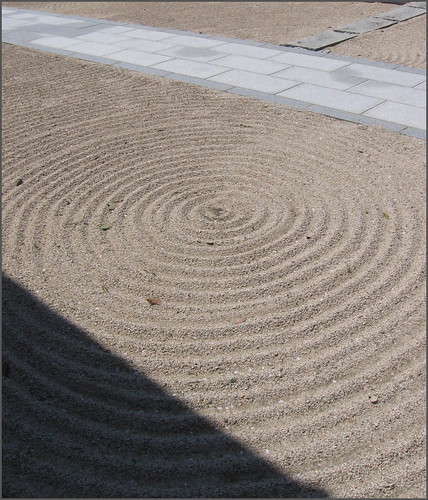
going in circles
the mind
the sand
© Gabi Greve, Spring 2008
.......................................................................
Tofukuji Temple (Toofukuji 東福寺)
and master gardener Shigemori Mirei 重森三玲
Shunmyo Masuno, Zen Garden Master
禅庭氏 増野
Koraku-En in Okayama (Koorakuen 後楽園 )
Tsuyama Park PHOTOS
:::::::::::::::::::::::::::::::::::::::::::::::::::::::::::::::::::::::::::::::::::::::::::::::::::::
- - - - - External LINKS
The Sakuteiki, or "Records of Garden Making,"
was written nearly 1000 years ago, making it the oldest work on Japanese gardening; in fact, the oldest book on gardening in the world! In this edition of the Sakuteiki, the authors provide both an English-language translation of this classic work; and an introduction to the cultural and historical context that led to the development of Japanese gardening.

Sakuteiki
Visions of the Japanese Garden:
A Modern Translation of Japan's Gardening Classic
by Jiro Takei, Marc Peter Keane
A Japanese court noble wrote the Sakuteiki during the Heian period (794-1184). During this critical era in Japanese history cultural influences on poetry, clothing-and gardening-that had been imported from China and Korea over the previous centuries were reexamined and reinterpreted into their unique Japanese forms. The Sakuteiki contains the first systematic record of this new gardening style-with both technical advice on gardening-building (much of which is still followed in today's Japanese gardens) and an examination of the four central threads of allegorical meaning which were integral features of Heian-era garden design.
source : www.goodreads.com
..........................................................................
"The Beauty of the Japanese Garden"
Introduction
The Japanese garden evolved from the landscaping of gardens and it developed into an original art form to become an important part of the Japanese culture. The art of Japanese garden is closely associated with the art of architecture and the stone arrangement which are the integral part of the comprehensive art of gardens. History of the Japanese garden goes back to around 7th century and the early documents about the design of gardens are from approximately the 10th century.
From the ancient remains of the rock arrangement ( of the AD 5th century ) we seem to find some likely resemblance in the existing Japanese gardens. They are the circular layout of rocks either flat or upright found in Akita and Hokkaido. However, it appears that they were used for the spiritual rituals and not designed for as stone arrangement for the beauty of gardens. It may be fair to say that the concept of gardens were yet premature in this period.
Although these early circular stones or other rocks that are jutting out in the cliff were the objects of worship and prayer for the spirits of nature, such spiritual foundation for the stones continued to sublimate in the later art form of stone arrangement and gardens. In the transition process from 7th century to 10th century, Buddhism and new cultures were brought in from China and Korea and they played important roles in the development of garden art. They became the philosophical foundation for the original design of the Japanese art of space in the form of gardens.
In the background of the design and rock arrangements of the Japanese garden there is a respect for the nature and abstract representations of the utopian world of the time which were derived from the religion and philosophy. Therefore, the Japanese gardens use natural stones, only without any artificial processing. They are arranged to show many expressions of sometimes dynamic forms and other times extremely subtle and sensitive forms. These gardens give many impressions to those who appreciate them and they move people in various ways. This is the evidence that the designers of the Japanese gardens of different times had extremely sophisticated sense of beauty and aestheticity.
In the following section we will see the Japanese gardens from different historical period and appreciate their beauty and the designs of arrangements.
(Translated by Mr.Shigeru Komori.)
© "The Basics of the Japanese Garden Elements"
.................................................................................

Reading Zen in the Rocks: The Japanese Dry Landscape Garden
by François Berthier (Author), Graham Parkes (Translator)
.................................................................................
Japanese Garden Dictionary
A Glossary for Japanese Gardens and Their History
Compiled and Edited by ONO Kenkichi and Walter EDWARDS
http://www.nabunken.go.jp/database/jgd/index.html
Welcome to the Bowdoin College web site
on Japanese gardens
The web site is dedicated to the gardens of Japan, and primarily to the historic gardens of Kyoto and its environs, including Nara.
http://learn.bowdoin.edu/japanesegardens/index.html
:::::::::::::::::::::::::::::::::::::::::::::::::::::::::::::::::::::::::::::::::::::::::::::::::::::::::::::::::::::::::::
. Edo craftsmen 江戸の職人 Edo no shokunin .

uekiya 植木屋, niwashi 庭師 gardener
There were various types of specialist in Edo.
hachimono shi 鉢物師 making potted plants, like Bonsai
naemono shi 苗物師 making plants growing from seeds or pruning
uekiya 植木屋 caring for trees in the parks and gardens
Uekiya and niwashi are terms for professional gardeners; the former was coined in the Edo period and the latter in the Meiji period.
(Sakuteiki)
"The origin of the term niwashi has not been pinned down very accurately. . . . "
Japanese Garden Design
Read Marc Keane :
- source : books.google.co.jp -
"Edo saw the rise of the niwashi or the professional garden maker who would eventually replace the role of the traditional designers . . . "
Sound Worlds of Japanese Gardens:
Read Michael D. Fowler :
- source : books.google.co.jp -
- quote -
Kentei 賢庭
Dates of birth and death unknown.
A gardener (niwashi) from the Azuchi-Momoyama to the beginning of the Edo periods (late sixteenth to early seventeenth centuries). He was involved in building the garden at Sanpōin of Daigoji temple, under the supervision of head priest Gien Jugō.
- source : Japanese Garden Dictionary -
.......................................................................
. hana-uri, hana uri 花うり / 花売り flower vendor .
.......................................................................
- quote -
Somei 染井 in Edo
the Somei area -- a general name given to a cluster of small towns and villages that specialize in growing ornamental plants and trees to plant in the gardens of all the wealthy daimyo in Edo. The two main towns in this area are Komagome and Sugamo, but most people in Edo know the area as "Somei" and the farmers who live in the region are known as the Somei uekiya (the landscape gardeners of Somei). They get their reputation from their great skill in raising thousands of different types of ornamental plants. The farms in the Somei area produce most of the ornamental plants that the daimyo plant in their gardens, and many flower markets are held in the small towns along the Nakasendo, where common people can also buy flowers, trees and shrubs. In fact, even the beautiful gardens inside Edo Castle are landscaped and tended by gardeners from Somei.
Gardening is one of the most common and most universal hobbies in Edo. Although the daimyo spend lots of money to build large and extensive gardens, even the poorest city dweller can raise flowers and small shrubs along the roadside or on their balcony, because all it takes is a pot, some dirt and a few seeds or cuttings. Since poor city dwellers have only a limited amount of land for growing plants, one popular hobby of lower-class people is bonsai . A bonsai tree is planted in a small pot and carefully trimmed to keep it from growing too big. If the grower does a good job of tending the tree, in ten years or so he will have a miniature bonsai tree, that looks exactly like a full-sized tree, but is only about a foot tall! Although Edo is a very crowded city, it is quite beautiful. In even the most crowded downtown neighborhoods, you can always see beautiful and well-tended flowers, shrubs and bonsai trees in almost everyone's front yard or doorstep. However, nothing can quite compare to the sight of Somei, with its endless acres of bushes, flowers and trees of every type imaginable.

Somei is the home of one of the most famous gardeners in Edo: Ihei Masatake. Masatake is the son of perhaps the greatest landscape gardener ever -- Ihei Sannojo, and many believe that Masatake is as good at actual gardening as his famous father. The Ihei family first got into the landscaping business back in the early days after Edo was founded. Masatake's grandfather was a simple farmer in the northern suburbs of Edo. Back then, most of the farms in the area grew only rice and vegetables for sale in the city, though a lot of farmers supplemented their income by working part time as gardeners and handymen at the estates of daimyo who lived nearby.
Ihei Masatake's grandfather was named Hotsukimaru. Since he was just a poor farmer, he did not have a last name. In Edo, most of the low-class people do not have a surname, because surnames are a sign of respect, and only fairly important people are allowed to have one. Hotsukimaru got a job working as a gardener and handyman at the estate of the Todo family, who were the rulers of Tsu province, in southern Japan. When Hotsukimaru was still a young man one member of the family, Todo Ihei, brought back some azalea bushes from his home in Tsu province and asked Hotsukimaru to plant them in the garden. The azaleas from southern Japan were more colorful than any Hotsukimaru had ever seen before, so he took cuttings home to his farm and carefully raised the bushes around his house. He soon discovered that if he carefully bred different plants together, the colors of the flowers were slightly different. After carefully tending the azaleas for about ten years, he had bred some beautiful varieties of different azalea, including purple, red, and even white varieties. After several years, when the new bushes had grown big enough, he brought these new varieties back to the Todo family estate and planted some in the gardens. When he saw them, Todo Ihei was amazed! He thought the bushes were so beautiful that he immediately appointed Hotsukimaru the head of all gardeners on the estate, and urged him to continue working to try to develop new varieties.
To show how pleased he was with the new types of azaleas, Todo Ihei asked the Shogun to let Hotsukimaru use a family name. When the Shogun saw the beautiful flowers, he agreed, as long as Hotsukimaru promised to grow some azaleas to plant in the gardens at Edo Castle. Hotsukimaru felt deep gratitude for his master. Once he got a last name, he would no longer be just a poor farmer -- he would be somebody important. To show his gratitude, he asked if he could take the name Ihei as his family name (so he would be named after his master). Todo Ihei agreed, and from that day on, everyone in the area knew of the gardener Ihei Hotsukimaru.
Ihei Hotsukimaru's son, Sannojo grew up on the Todo estate, and worked with his father in the gardens. More and more daimyo in the area started planting large and elaborate gardens ,so they could show off to their neighbors. As the demand for gardeners increased, Hotsukimaru and Sannojo set up a family landscaping business. Although many other farmers in the area also began doing landscape work at the daimyos' estates, the Ihei family was the most famous. All the daimyo wanted to have their landscaping done by the Ihei ueki-ya (the Ihei landcaping company).
Sannojo learned all about azaleas from his father, but he could see that there was a strong demand for all sorts of flowering trees and bushes. He started to study every type of flowering tree and bush he could find, and planted many different varieties on his farm in Komagome. By the time Sannojo was thirty, he had developed several new varieties of ume (plum trees) and sakura (cherry trees). Since the new types were more colorful and had more flowers, all the daimyo wanted to buy them for their gardens, so they could show off to their friends. Sannojo became very wealthy selling the new types of cherry trees, plum trees, azaleas and other flowering bushes. When they saw how succesful the Ihei family had become, most of the other farmers in the area stopped growing rice and began raising ornamental plants instead.
By the time Masatake was born, Somei was the center of a huge landscaping business. From the time he was a little boy, every hour of the day he spent doing landscape work for rich daimyos, or trying to breed new varieties of flowers. The demand for trees and shrubs to plant in the elaborate gardens of Edo provides work for hundreds of farmers, and the convenient location of the Somei area -- on the main road leading into the suburbs where all the daimyo live -- makes it the "flower and garden center" of the entire country.
Naturally, every daimyo wants to have the most unique plants in their garden, so they can show off to the other daimyo . Therefore, the Somei uekiya (landscape gardeners of Somei) search far and wide for new varieties of plants. Not only do they try to breed new varieties of popular flowers; they also search in the forests for new species that might make good ornamental plants. They even import seeds and cuttings from countries far, far away.

In 1695, Ihei Sannojo published a best-selling book on gardening that gave information on over 2000 different types of plants, including varieties from as far away as Africa and South America.
- source : edomatsu/somei 染井 -
- quote -
江戸の植木屋 その1
植木屋の成立と伊藤伊兵衛 Ito Ihei
三之烝(三代伊兵衛)Sannojo (Ihei third generation)
- 植木屋の種類 - Types of Uekiya
Places were many Uekiya lived in Edo:
巣鴨 Sugamo、染井 Somei、駒込 Komagome、小石川 Koishikawa、千駄木、田畑、根岸、三河島、本所、向島、亀井戸、また四谷、赤坂、青山、麻布、芝、目黒 and more
- source : koichiro1945 -
.......................................................................

Snow Viewing at Mokubo-ji Temple: the Uekiya Restaurant
木母寺雪見 植木屋 ー 江戸高名会亭尽
Utagawa Hiroshige
.......................................................................
植木屋の無口めでたし松落葉
uekiya no mukuchi medetashi matsu ochiba
this gardener
is really not talkative -
pine needles falling
Ishikawa Keiroo 石川桂郎 Ishikawa Keiro (1909 - 1975)
Haiku poet from Tokyo
- - - - - MANY Haiku about uekiya 植木屋 and niwashi 庭師
- source : haikureikudb -
.......................................................................

江戸の園芸について、浮世絵 Edo Gardening seen through Ukiyo-E
江戸庭へ片足入れば時鳥
edo niwa e kata ashi ireba hototogisu
stepping one foot
in an Edo garden
"cuckoo!"
Tr. David Lanoue
. Kobayashi Issa 小林一茶 in Edo . .

source : タンタン期フランス留学
江戸園芸花尽くし
at 太田記念美術館
:::::::::::::::::::::::::::::::::::::::::::::::::::::::::::::::::::::::::::::::::::::::::::::::::::::::::::::::::::::::::::
......................... H A I K U
KIGO of the category EARTH
kigo for all spring
. haru no niwa 春の庭(はるのにわ garden in spring
haru no sono 春の園 (はるのその) garden or park in spring
shunen, shun-en春 春園(しゅんえん)
..... shun-en 春苑(しゅんえん)
:::::::::::::::::::::::::::::::::::::::::::::::::::::::::::::::::::::::::::::::::::::::::::::::::::::
kigo for all summer
. natsu no niwa 夏の庭 (なつのにわ) garden in summer
natsu no sono 夏の園(なつのその)park in summer
. niwa suzushi 庭涼い cool garden
.................................................................................
humanity kigo for all summer
ki no eda harau 木の枝払う (きのえだはらう)
cut back the tree branches
..... eda harau 枝払う(えだはらう)cut back branches
..... eda orosu 枝下す(えだおろす)"take away branches"
In summer when the trees start to grow and bring too much darkness to the garden or grow over roofs and windows, they have to cut back. Thus the inside will get more light and the garden feel cooler.
:::::::::::::::::::::::::::::::::::::::::::::::::::::::::::::::::::::::::::::::::::::::::::::::::::::
kigo for all autumn
aki no niwa 秋の庭(あきのにわ)garden in autumn
niwa no aki 庭の秋(にわのあき) autumn in the garden
shuuen, shuu-en 秋園 / 秋苑 (しゅうえん)
aki no sono 秋の園(あきのその)park in autumn
hanazono 花園 park with flowers
..... kadan 花壇(かだん)
..... kaho 花圃(かほ)
hanabatake 花畑(はなばたけ)field with flowers
. . . CLICK here for Photos !
Blumenbeet
- - - - - not to mix with
ohanabatake, o-hanabatake お花畠 (おはなばたけ)
fields of wild flowers in high mountains
observance kigo for early autumn
. niwa no tategoto 庭の立琴 koto standing in the garden .
..... tategoto 立琴(たてごと)
For the Tanabata Star Festival
:::::::::::::::::::::::::::::::::::::::::::::::::::::::::::::::::::::::::::::::::::::::::::::::::::::
kigo for all winter
fuyuniwa 冬庭(ふゆにわ)garden in winter
kanniwa 寒園(かんえん)garden in the cold
niwa karuru 庭枯るる(にわかるる) withering garden
karesono 枯園 かれその withering park
fuyu no sono 冬の園(ふゆのその) park in winter
.................................................................................
Expressions like "secret garden" are not kigo,
but TOPIC for haiku.
:::::::::::::::::::::::::::::::::::::::::::::::::::::::::::::::::::::::::::::::::::::::::::::::::::::::::::::
:::::::::::::::::::::::::::::::::::::::::::::::::::::::::::::::::::::::::::::::::::::::::::::::::::::::::::::
Haiku and Zen Gardens, a project
The following postings are a transcript of students' responses to our unit on Art and the Ordered Cosmos: Japanese views of nature.
Before completing this assignment, students examined Zen Buddhism and its notion of the transience of the world, Shinto, and their expression in the samurai code of Bushido, "The Peach Orchard" from Dreams by Akira Kurosawa which exemplifies the Shinto notion of nature as alive and as an expression of the Kami while also demonstrating the Zen notion of the transience of beauty and the world, and the Japanese Way of Tea (tea ceremony).
Students also studied Zen gardens and created one in class. Students were required to write a Haiku poem, an art form which attempts to capture some essential aspect of eternity through a single moment in nature. Student postings have not been edited in any way.
one sample poem
The rock buried
still content and quiet
surrounded by friends and light.
© 2000, Assignment from Dr. Vess
:::::::::::::::::::::::::::::::::::::::::::::::::::::::::::::::::::::::::::::::::::::::::::::::::::::
buddha’s fingerprint
in the sand...
Zen garden
summer drought —
the Zen garden
in bloom
© Standford Forrester
:::::::::::::::::::::::::::::::::::::::::::::::::::::::::::::::::::::::::::::::::::::::::::::::::::::
Compiled by Larry Bole

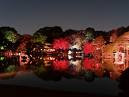
Rikugien - Japanese Garden 六義園(りくぎえん))
Rikugi-En
I wrote this on a photograph by
Museki Abe at his Interactive Photo Haiku website:
Rikugien
from one poem to the next
a stony path
The other poems I like that were written for that photo are:
three butterflies enter
the garden formally through
the human gate ~
brahman~Narayanan~
bamboo fence
unconstrained the garden
comes through
Gillena Cox
"Rikugien is one of Tokyo's most beautiful, Japanese style landscape gardens. Built around 1700 by Yanagisawa Yoshiyasu, Rikugien literally means "six poems garden" and reproduces in miniature 88 scenes from famous poems."
http://www.japan-guide.com/e/e3026.html
:::::::::::::::::::::::::::::::::::::::::::::::::::::::::::::::::::::::::::::::::::::::::::::::::::::
Zen garden -
goldfish and maple leaves
the same deep red
© Andre Surridge, 2006 NZ
:::::::::::::::::::::::::::::::::::::::::::::::::::::::::::::::::::::::::::::::::::::::::::::::::::::
wind blows plum blossom
far from Kyoto garden
petal falls from vase
- Shared by Deborah Barbour Lundy -
Joys of Japan, 2012
:::::::::::::::::::::::::::::::::::::::::::::::::::::::::::::::::::::::::::::::::::::::::::::::::::::

wildlife in my garden
insects flying around
buzz ! skreez ! chirps !
- Shared by Mokhtar Sah Malik -
Joys of Japan, 2012
:::::::::::::::::::::::::::::::::::::::::::::::::::::::::::::::::::::::::::::::::::::::::::::::::::::
summer grasses
grow wild in my garden -
I call them weeds
sometimes
I call my weeds "wild flowers" -
it all depends on the situation
. Gabi Greve, Summer 2012 .
Pondering Haiku
:::::::::::::::::::::::::::::::::::::::::::::::::::::::::::::::::::::::::::::::::::::::::::::::::::::
Daruma Pilgrims in Japan
. SAIJIKI ... category EARTH
[ . BACK to DARUMA MUSEUM TOP . ]
[ . BACK to WORLDKIGO . TOP . ]
- #teien #niwashi #uekiya #someiedo #edosomei -
:::::::::::::::::::::::::::::::::::::::::::::::::::::::::::::::::::::::::::::::::::::::::::::::::::::



 Posts
Posts


7 comments:
Nature naturalized in Japanese gardens
By DONALD RICHIE
INCOMPARABLE JAPANESE GARDENS, photographs by Gorazd Vilhar, text by Charlotte Anderson. Tokyo: IBC Publishing, 2008, 192 pp., with 159 full-color plates, ¥5,500 (cloth) If we compare the "incomparable," we will discover that the difference of the Japanese garden depends upon the Japanese, very different, attitude toward nature.
Two attitudes toward nature are everywhere possible: you confront it or you accept it. This is illustrated in gardens West and East. In the former (think Versailles), nature is but the rawest of materials to do with as you will. Trees are in ordered ranks, paths are straightened, a form is imposed.
In the latter (see any of the 75 Japanese gardens here beautifully photographed), nature is accepted and adopted as a model. But as Charlotte Anderson tells us in her interesting introduction, one of the earliest garden manuals, the 11th-century "Sakuteki," recommends "looking at nature's most beautiful landscapes for inspiration, yet it advises that a garden should reflect nature, not copy it."
Nature is thus not only accepted, it is also naturalized. Just as the flowers in ikebana ("living flowers") are presumed to be more flowerlike than any natural bloom (even though those seen in ikebana are, having been picked, either dead or dying), so the Japanese garden is to be more natural than nature.
To achieve this desired effect, gardening in Japan reached the unexampled heights that Gorazd Vilhar's photographs well illustrate. At Kyoto's Shinya-in, river stones are laid in a pattern to create the impression of a flowing stream. In Myoman-ji, a Buddhist monk rakes wavelike patterns in the sand of the dry landscape garden. At the Shugaku-in, the view of the distant mountains is appropriated and brought within the focus of the garden design.
From here one may follow the Japanese garden as it mimics Mount Sumeru, the center of the Buddhist world, with its sand-pile reconstruction at Kennin-ji. It is then but a step to later gardens (such as the Koraku-en in Tokyo) that are so crammed with replicas of famous world sights that they seem like some ancestor of Disneyland's "It's a Small World" ride.
Making the garden more natural than nature has its limitations. Anderson tells us of a man-made mountain in the Ritsurin Koen up which workmen with full buckets of water scrambled so that when the lord walked by there would be a splendid waterfall coursing down.
Earlier garden design, however, kept the semblance of nature itself and it is this which is so ably caught on these pages.
Vilhar and Anderson have an impressive repertoire of books doing this — several volumes on Kyoto, one on Tokyo, one on festivals, another on shrine and temple offerings, as well as some beautiful bound postcard collections.
"Beautiful" would be perhaps the word to describe this work, in that Vilhar follows the beaux-arts tradition of creating that which is traditionally pleasing.
To this he adds his own accent, one necessary to all photographers photographing here, the Japanese technique of "selective vision," finding the angle from which the power line, the parked bicycle, the vending machine, are not visible. Wide-angle Japan, showing all the clutter, is not often seen because it is not widely photographed.
Rather, the view is selected, or restricted. Just as the "Sakuteki" counsels a reflection rather than a copying of nature, so, such splendid beaux-art photographs as these, reflect nature naturalized.
http://search.japantimes.co.jp/cgi-bin/fb20080518dr.html
江戸庭へ片足入れば時鳥
edo niwa e kata ashi ireba hototogisu
stepping one foot
in an Edo garden
"cuckoo!"
Kobayashi Issa
(tr. David Lanoue)
.
The Uekiya and chrysanthemum growers from
巣鴨 Sugamo district "ducks nest"
Toshima ward, Sugamo sub-district 1 - 5.
.
https://edoflourishing.blogspot.com/2018/06/toshima-ward-sugamo.html
.
駒込 Komagome district / 文京区 Bunkyo ward
文京区 本駒込一丁目から本駒込六丁目 Hon-Komagome from the 1st to the 6th sub-district
It is composed of many sub-districts
駒込片町、駒込曙町、駒込富士前町、駒込上富士前町、駒込吉祥寺町、駒込浅嘉町、駒込動坂町、駒込神明町、小石川駕籠町
There were at one time seven Komagome sub-districts, called
Komagome shichiken mura 駒込七軒村 Seven villages of Komagome.
They also used to be called
. Somei shichiken mura 染井七軒村 .
.
https://edoflourishing.blogspot.com/2018/06/komagome-district.html
.
Legend from Osaka castle
植木職人 ueki shokunin
In 大阪城内 the compound of Osaka castle there was a large pine tree whith 植木職人 a special gardener to take care of it.
Once he tried to trim a branch with sharp hasami 鋏 scissors, but he became very sick the same day.
.
https://edoflourishing.blogspot.com/2020/05/shokunin-craftsmen-legends.html
.
Komagome Shichiken Cho 駒込七軒町 Komagome Chichiken Town
北豊島 Kita-Toshima
【北豊島】染井七軒町 Kita Toshima, Somei Shichiken Town
,
all about Somei
https://edoflourishing.blogspot.com/2022/01/somei-shichiken-komagome.html
.
In the Shelter of the Pine: A Memoir of Yanagisawa Yoshiyasu and Tokugawa Japan
Ōgimachi Machiko. Translated by G. G. Rowley
松蔭日記 (also written 松陰日記)
Ōgimachi Machiko 正親町町子 (1679?-1724)
Columbia University Press, 2021
.
Post a Comment