[ . BACK to DARUMA MUSEUM TOP . ]
. 弁天と伝説 Legends about Benten .
:::::::::::::::::::::::::::::::::::::::::::::::::::::::::::::::::::::::::::::::::::::::::::::::::::::
Fudo Myo-O Gallery
:::::::::::::::::::::::::::::::::::::::::::::::::::::::::::::::::::::::::::::::::::::::::::::::::::::
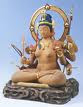
Benten, Benzaiten 弁天 弁財天
 Benten on a dragon
BENZAITEN 弁財天
Benten on a dragon
BENZAITEN 弁財天
She is also sometimes mixed up with the God of Water.
In India, the sound of her lute is said to evoke the sound of a flowing river and thus provide rain for the dry areas.
. . . CLICK here for Photos !
Goddess of Music, Poetry, Learning, & Art
River Goddess, Patron of Children
Protector of the Nation
Shinto Association = Kami Itsukushima Hime 厳島姫命
The sea goddess Benzaiten is the sole female among the
Seven Lucky Gods of Japan. Her temples and shrines are almost invariably in the neighborhood of water -- the sea, a river, or a pond. She is the patroness of music, the fine arts (dancing, acting, visual), and good fortune in general, and is often shown carrying a biwa (Japanese mandolin) or playing a lute.
She is often represented as a beautiful woman with the power to assume the form of a serpent, or shown seated on a dragon or serpent and playing a lute. In fact, the snake is almost always associated with Benzaiten, who was originally a Hindu deity (
Sarasvati) who represented learning, music and poetry. Such artistic learning and wisdom often bring prosperity, hence her inclusion in the Japanese group of seven luckies. She also has a jewel that grants desires. Some say it is a jade, while others say it is a pearl.
Read more about her here:
Mark Schumacher : Benzaiten
 source : green shinto facebook
Benten at Chikubushima 竹生島 in lake Biwa
. Vasant Panchami festival .
source : green shinto facebook
Benten at Chikubushima 竹生島 in lake Biwa
. Vasant Panchami festival .
A Hindu festival celebrating
Saraswati,
the goddess of knowledge, music and art.
:::::::::::::::::::::::::::::::::::::::::::::::::::::::::::::::::::::::::::::::::::::::::::::::::::::
Offering raw eggs Festival
生卵を奉納するお祭
at Zeniarai Benten 銭洗弁天, Kamakura on the first day of the snake in the new year.
Mi no Kamisama 巳の神様 Snake Deity
Benten is related to the God of Snakes and Serpents, and the favorite food of this animal are eggs. So at the shops around Zeniarai Benten they sell boiled eggs as offerings, to have your wish come true.
弁天卵(ゆで卵)Benten Yudetamago
"Benten Boiled Eggs" are served at some Benten shrines on the evening of December 31, then people line up to ring the bell into the New Year.
. WASHOKU
Eggs as offerings to the deities
 quote
quote
Uga Benzaiten 宇賀弁財天,
a deity of good fortune and wealth. Most sources believe
Ugajin is none other than Uga no Mitama, the Shinto goddess of foodstuffs mentioned in Kojiki and Nihongi, two of Japan's earliest records. Uga no Mitama is also commonly identified with a male counterpart named Uka no Mitama, the deity of grains. This Shinto pair are further identified with Inari, the parent Shinto god/goddess of rice and agriculture, who is identified with a white fox as his/her messenger.
source
Benzaiten / Mark Schumacher
. Uga no Mitama no Kami 宇賀御魂神 .
at 梅園身代り天満宮 Umezono Migawari Tenmangu Shrine

Ugajin 宇賀神
at temple Mimuroto-Ji 三室戸寺 Uji, Kyoto
:::::::::::::::::::::::::::::::::::::::::::::::::::::::::::::::::::::::::::::::::::::::::::::::::::::
Daruma Museum
. The Water God, Sui-jin Suijin 水神,
Sui-ten Suiten水天
More details about the Water Deities and Snakes
. Shichi-Fukujin 七福神 Seven Gods of Good Luck
:::::::::::::::::::::::::::::::::::::::::::::::::::::::::::::::::::::::::::::::::::::::::::::::::::::
Benten kozoo 弁天小僧 Benten Kozo
"'Benten Musume Meo no Shiranami'"
Shiranami Gonin Otoko(白浪五人男)
The Lad Benten (one of the five famous thiefs)
. . . CLICK here for colorful Photos !
© More in the WIKIPEDIA !
................................................................................
 Benten Fuku-ume 弁天福梅 Benten Lucky Plum wine
Benten musume 弁天娘 "Lady Benten"
Benten Fuku-ume 弁天福梅 Benten Lucky Plum wine
Benten musume 弁天娘 "Lady Benten"
a brand of sake ricewine
. . . CLICK here for Photos !
................................................................................
Sweets from Zeniarai Benten Kamakura

"the fountain of money" 銭洗いの泉
They come in the form of old coins.
................................................................................
 ningyooyaki 人形焼き waffles
Dough filled with sweet bean paste, pressed in the form of the Seven Gods of Good Luck, including our Benzaiten.
. WASHOKU
Ningyooyaki, ningyoyaki 人形焼 figure waffles
(also with Daruma san)
take a bite
from the Benten face -
good luck for you
:::::::::::::::::::::::::::::::::::::::::::::::::::::::::::::::::::::::::::::::::::::::::::::::::::::
 Benten dorei 弁天 土鈴 clay bell
 Benten ema 弁財天 絵馬 votive tablet
 Benten hariko 弁天 張子 papermachee doll

Benten omamori 弁天 お守り
Benten amulets
. Shichifukujin 七福神 - Amulets .
:::::::::::::::::::::::::::::::::::::::::::::::::::::::::::::::::::::::::::::::::::::::::::::::::::::
bijin Benten 美人弁天 Benten for Beauty
Itsukushima Shrine, 厳島神社
栃木県足利市本城2丁目1855 - Tochigi, Ashikaga
Akashi Benten 明石弁天
Ashikaga is "the Land of Beauties".
This shrine relates back to 1056, to
Akashi hime 明石姫 Princess Akashi
She was a beautiful, gentle woman, protecting her husband 源八幡太郎義家
Minamoto no Yoshiie Hachimantaro, as best as she could.
 . Minamoto no Yoshiie Hachimantaro 源八幡太郎義家
Hachimantarō, Hachiman Taro .
. Hidaka Jinja 日高神社 Hidaka Shrine . - and Hachimantaro in Mizusawa, Iwate
- - - HP of the shrine :
Her amulets grant beauty, good health and a long life.
This is the only shrine in Japan that grants a
certificate for "Beauty". 美人証明.

Amulet from Bijin Benten 美人弁天お守り

Beauty paper for your face, 美人弁天あぶらとり紙

Amulet to become a smiling beauty and mother.
- source : bijinbenten.com
. biyoo jisha 美容寺社 praying for beauty .
.......................................................................
pokkuri Benten ポックリ弁天 / ぽっくり弁天
Benten granting a sudden death
Seneiji 専栄寺 / 専榮寺 Senei-Ji, Shingon sect
千葉県佐倉市臼井, Chiba, Sakura town, Obukai 498-2
A small sanctuary in the temple compound.

In the temple compound is also a small sanctuary for five Shinto deities 五社様
Oosugi Jinja 大杉神社 Osugi Jinja
大己貴命 Oanamuji no mikoto , 天照大神 Amaterasu Oomikami, 倉稲魂命 Uka no Mitama no Mikoto (Uganomitama), 埴安姫命 Haniyasu Hime 、少彦名命 Sukunahikona no mikoto.
. pokkuri ぽっくり amulets for a sudden death, "drop dead" .
- quote
Haniyasu
A tutelary kami of earth.
According to an "alternate writing" recorded in Nihongi,
Haniyasu no kami was produced by Izanagi and Izanami after they had completed giving birth to the "Great Eight-Island Country" (Ōyashimaguni). The name
haniyasu is thought to mean "to knead earth so as to make it soft." Kojiki relates that the two kami
Haniyasubiko no kami and
Haniyasubime no kami were produced from Izanami's feces.
Kami with similar names include
Haniyamahiko and
Haniyamabime, two kami thought to have the same divine virtues and powers (shintoku), and which are collectively known by the name Haniyasu no kami.
Haniyasu no kami is worshiped even today alongside other deities, frequently on the occasion of groundbreaking rituals (jichinsai).
- source : Nakayama Kaoru, Kokugakuin 2005
:::::::::::::::::::::::::::::::::::::::::::::::::::::::::::::::::::::::::::::::::::::::::::::::::::::
H A I K U
kigo for the NEW YEAR
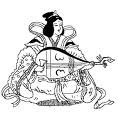 hatsu Benzaiten 初弁財天(はつべんざいてん)
first visit to a Benten shrine
..... hatsu Benten 初弁天(はつべんてん)
"first Benten"
fuse mairi 布施参(ふせまいり)
visit a Benten shrine(mairi) and make an offering (fuse)
hatsu mi 初巳 (はつみ) "first snake"
first day of the snake
. . . CLICK here for Photos !
.................................................................................
 Minoo no tomi 箕面の富 (みのおのとみ)
lottery at Minoo
Mino no tomi
Minoo san Benzaiten mairi 箕面山弁財天参(みのおさんべんざいてんまいり)/ 辨財天
Visiting Benten at Mount Minoo
otomi hoo-e 御富法会(おとみほうえ)
Minoo tomitsuki 箕面富突(みのおとみつき)
picking a lottery ticket in Minoo
ichi no tomi 一の富(いちのとみ)first lottery win
ni no tomi 二の富(にのとみ)second lottery win
san no tomi 三の富(さんのとみ)third lottery win
tomifuda 富札(とみふだ)lottery ticket
..... o-tomi san お富さん(おとみさん)
Minoo City is located near Osaka, between Kyoto and Kobe.
At the temple Ryuan-Ji (Ryuuanji, Rooanji 箕面山滝安寺吉祥院) there is a famous lottery every year, since the Nara period. There are also poems of the Kamakura period about this lottery.
People buy a ticket (tomikuji宝くじ), write their name on it and put it in a box. When all have finished, a priest sticks a sharp pole in the box to pick out the first ticket, the BIG LUCK, daifuku 大福.
The person who won the first ticked now had to rush home without sleeping on the way, to ensure the good luck would not diminish.
The winning tickets bring good luck in business, health for the whole family and good fortune in general. They were considered as a good luck talisman 大福御守 from the temple.
The second and third winning lottery ticket were also considered very auspicious.
Other temples later imitated this kind of lottery, but when it became "big business", the government of the Eod period forbid it. Still, lottery was carried out secretly.
Taiyuuji no tomi 太融寺の富 lottery at temple Taiyu-Ji
At the Benten hall 弁天社 of this temple tomikuji 富籤 were sold.
At this shrine lots for the female Benten and the male Ox deity Go-Oo 牛王 were sold.
The wish was for
shichinan sokumetsu shichifuku sokushoo
七難即滅七福即生
sevenfold harm to leave
sevenfold luck to come
This expression is also related to
the Seven Gods of Good Luck.
. Somin Shorai Fu 蘇民将来符 Somin Shorai Amulets .
いの組の一番富の太融寺
i no kumi no ichiban tomi no Taiyuuji
the first lot
from the I-group lottery
at temple Taiyu-Ji
Ariyama Takehiko 有山武彦
. tomikuji, takarakuji 宝くじ / 富籤 lottery .
- Introduction -
.................................................................................
. WASHOKU
momiji tenpura もみじ天ぷら/ 紅葉の天ぷら
tempura from maple leaves
From Mino Town
and the history of
temple Ryuan-Ji 箕面山瀧安寺
Nowadays,the Great Festival of Benzaiten at the temple Ryuan-Ji is on October 10.
:::::::::::::::::::::::::::::::::::::::::::::::::::::::::::::::::::::::::::::::::::::::::::::::::::::

Benzaiten Shrine at Inokashira in Snow by Hiroshige
one breath...
outside the window
winter clouds
- Shared by Jimmy ThePeach -
Haiku Culture Magazine, 2013
:::::::::::::::::::::::::::::::::::::::::::::::::::::::::::::::::::::::::::::::::::::::::::::::::::::
almost over
this year of the snake, still
I pray to Benzaiten
Angelee Deodhar - December 2013
:::::::::::::::::::::::::::::::::::::::::::::::::::::::::::::::::::::::::::::::::::::::::::::::::::::
 source : Ukiyo-e & sumi-e, facebook
Aoigaoka Keisei (1818-1844) 葵岡渓栖
:::::::::::::::::::::::::::::::::::::::::::::::::::::::::::::::::::::::::::::::::::::::::::::::::::::
Benten (Benzaiten; Saravasti)Ben-Ten
Feld- und Flußgöttin der alten indischen Mythologie. Wasser war in Indien eine Kostbarkeit und mit dem Saiteninstrument BIWA wurde versucht, die Geräusche von plätscherndem Wasser nach~zu~ahmen. Daher hat Benten oft eine Biwa (Lautenart) in den Armen und wurde später in Japan zur Göttin der Musik, Literatur und Sprachgewandheit; auch Reichtum, Gesundheit und langes Leben.
Als Gottheit der Künste auch folgende Bezeichnungen: Bionten 美音天, Myooonten 妙音天, Myooten Ongaku 妙音天音楽, Daibenten 大弁天, Daibenzaiten 大弁才天, Daiben Kudokuten 大弁功徳天, Daibenzai Kudokuten 大弁才功徳天.
Die shintooistische Version der Benten ist die Gottheit Itsukushima Hime no Mikoto.
Zur Vermehrung des Reichtums wird Geld in einem Teich der Benten gewaschen (Zeniarai Benten 銭洗弁財天) oder ein altes Goldstück (koban 小判) in der Geldbörse aufbewahrt.
Da es sich um eine Wassergottheit handelt, liegen ihre Tempel oft am oder im Wasser, nur drei große Anlagen in Japan liegen allerdings direkt auf Inseln:
Itsukushima Schrein auf Miyajima bei Hiroshima; 厳島神社
Tempel Hoogonji 宝厳寺 auf der Insel Chikubujima im Biwasee und 竹生島
in den Grotten von Enoshima bei Kamakura. 江ノ島
Der Bote der Benten ist eine Schlange; eine Geldbörse aus Schlangenleder ist besonders begehrt.
Wahrscheinlich identisch mit der Wassergottheit
Ugajin 宇賀神 (Menschenkopf mit Schlangenleib). Es gilt folgende Assoziationsreihe des Glaubens:
Benten ... Wassergottheit ... Schlangenleib mit Menschenkopf ... Schlange ... Drachen.
Ab Kamakura-Zeit Benzaiten genannt und als Göttin für Wohnen, Essen, Trinken und Reichtümer verehrt; ab Muromachi-Zeit auch eine der sieben Glücksgötter.
Ikonografie:
Herabhängende Haare oder Knoten. Im aufgesteckten Haar ein weiterer Kopf oder eine Schlange mit Menschenkopf (Ugajin).
Älteste Formen mit acht Armen (Happi Benten 八臂弁財天):
mit Pfeil, Bogen, Schwert, Axt, Donnerkeil, Stab, Rad der Lehre und wunscherfüllendem Juwel. Es gibt sechs berühmte Benten-Statuen mit acht Armen, eine davon befindet sich als Geheim-Figur in Enoshima.
Japanische Variation seit der Kamakura-Zeit bzw. Edo-Zeit:
7. Glücksgöttin als nackte weiße Frauengestalt mit einer Biwa. Die nackte Gestalt wurde manchmal mit reichen Frauengewändern umhangen.
Besondere Form:
Benten mit 15 Knaben (Juugo Dooji)
十五童子(じゅうごどうじ)
Benten ist von 15 Knaben in chinesischen Gewändern umgeben. Diese Knaben haben besondere Gegenstände bzw. Merkmale:
Aikyô Dôji 愛敬 : Pfeil und Bogen.
Gyuba Dôji 牛馬 : Ochs und Pferd.
Hanki Dôji 飯櫃 : Auf dem Kopf ein Gefäß mit Reis.
Hikken Dôji 筆硯 : Pinsel und Tuschestein.
Inyaku Dôji 印鑰 : Im rechten Winkel gebogener Schlüssel.
Ishô Dôji (Inyaku) 印鑰 : Mit zusammengelegten Kleidungsstücken.
Juusha Dôji 従者 : Drei Juwele.
Kantai Dôji 官帯 : Gürtel für Festlichkeiten.
Keishô Dôji 計升 : Viereckiges Reismaß.
Konzai Dôji 金財: Waage zum Goldwiegen.
Sanyô Dôji 蠶養 : Gefäß mit Seidenraupen.
Sensha Dôji 船車 : Schiff und Lastkarren.
Shômyô Dôji 生命 : Schwert und Juwel.
Shusen Dôji 酒泉 : Krug mit Reiswein.
Tôchuu Dôji 稻籾 : Reisballen.
Zenzai Dôji 善財 : Sack (mit Goldstaub).
Aikyô Dôji ist wahrscheinlich eine Version des Cupid.
Zenzai Dôji als eigenständige Figur wird im Kegon-Sutra erwähnt. Er ist das reinherzige Kind einer wohlhabenden Familie. Als er die Lehre des Monju Bosatsu hörte, bekehrte er sich und studierte unter Monju. Er errang großes Wissen und erlangte schließlich die Erleuchtung. Es gibt Abbildungen in Mandalaform dieser Lebensgeschichte des Zenzai Dooji seit der späten Heian-Zeit (Kegon Kaie Zenchishikizu Mandara 華厳海絵善知識曼荼羅).
. . . CLICK here for Zenzai Doji Photos !
Jeder dieser 15 Knabenfiguren ist als ursprüngliche Gestalt ein Nyorai, ein Bosatsu und ein Ten zugeordnet.
Gabi Greve
. Buddhastatuen ... Who is Who
Ten 天 (Devas)
 The Seven Gods of Good Luck and Daruma san
The Eight Gods of Good Luck from Seya 瀬谷八福神
:::::::::::::::::::::::::::::::::::::::::::::::::::::::::::::::::::::::::::::::::::::::::::::::::::::
Gyuuba Dooji 牛馬童子(ぎゅうばどうじ)
at Hashiori Pass, Kumano 箸折(はしおり)峠
. . . CLICK here for Photos !
Gyuba Doji (a boy riding on ox and horse)
is a stone statue located in back of Hokyointo (stone stupa) in Hashiori Pass on the Nakahechi route of the Kumano Ancient Road. The statue is only 50 cm tall but it is a symbol of the Nakahechi route.
Next to it stands the statue of En no Gyoja, the founder of mountain practice. It is said that the figure represents the tragic Emperor Kazan on the pilgrimage to Kumano Shrine. Emperor Kazan ascended the Imperial throne at a young age in the middle of the Heian period (794-1192) but was tricked into abdicating by the Fujiwara family’s conspiracy. After his abdication, he became a Buddhist priest and was given the appellation of Hoo (pious ex-emperor).
The name of the pass,
Hashiori (literally meaning “breaking chopsticks”), is derived from the old story that when the emperor’s party had a meal at this place, they broke stems of Japanese pampas grass and used them in place of chopsticks.
Gyuba Doji statue keeps on giving a gentle look to the pilgrims on the Nakahechi route.
source : nippon-kichi.jp
.................................................................................
On June 20, 2008, citizens of Tanabe City learned of the defacing of the statue known as “Hashiori Pass Gyubadoji.” The Chinese characters for Gyubadoji can be separated into the parts – Gyu meaning cow, ba meaning horse, and doji meaning a child (in this instance, the young Ex-emperor, Kazan-in). This statue is on the Nakahechi section of the Kumano Kodo World Heritage pilgrimage route and is often used as a symbol of the Kumano Kodo. This pilgrimage trail stretches from Kyoto to Nachi in the south of Wakayama Prefecture with the Nakahechi area.
Gyubadoji is on the first section of the route after it turns inland towards the first of three grand shrines, Kumano Hongu Taisha. It is little more than a twenty minute hike from the main highway leading to Hongu-cho and Kumano Grand Taisha, and it is a relatively easy hike which is popular with visitors to Kumano.
The statue was defaced with the head of Kazan-in, a retired emperor from the 10th century, being taken.
source : kumanokodoguides.blogspot.com
:::::::::::::::::::::::::::::::::::::::::::::::::::::::::::::::::::::::::::::::::::::::::::::::::::::

ema from shrine Hakone Jinja 箱根神社
:::::::::::::::::::::::::::::::::::::::::::::::::::::::::::::::::::::::::::::::::::::::::::::::::::::::::::::::::::::::::::

Torii in front of a Benten sanctuary are very popular, although torii are usually only found at the entrance of a Shinto shrine.
Torii are also found at the entrance of sanctuaries dedicated to the group of
TEN 天部, the devas, many of them coming as deities from India.
:::::::::::::::::::::::::::::::::::::::::::::::::::::::::::::::::::::::::::::::::::::::::::::::::::::
. Noten Okami 脳天大神 .
at 龍王院 Ryuo-In - Dragon God Shrine, Yoshino, Kinpusenji 金峯山寺
O-Fudo Sama Gallery
. 弁天と伝説 Legends about Benten .
[ . BACK to DARUMA MUSEUM TOP . ]
[ . BACK to WORLDKIGO . TOP . ]
- #benten #benzaiten -
:::::::::::::::::::::::::::::::::::::::::::::::::::::::::::::::::::::::::::::::::::::::::::::::::::::::::::::::::::::::::::







 Posts
Posts


