11/12/2009

Himiko and Yamatai

[ . BACK to DARUMA MUSEUM TOP . ]

:::::::::::::::::::::::::::::::::::::::::::::::::::::::::::::::::::::::::::::::::::::::::::::::::::::

Daruma Pilgrims Gallery

:::::::::::::::::::::::::::::::::::::::::::::::::::::::::::::::::::::::::::::::::::::::::::::::::::::

Princess Himiko and the Yamatai Kingdom

There are many legends around this ancient queen of the land of WA during the Yayoi period.

Her country is located in Kyushu or in the Nara plain ...
The Chiefdom of Yamatai

In the city of Saga, Kyushu, there is a memorial park for her with a village replica in the style of the 3rd century.
CLICK for more photos
The famous site from Yoshinogari 吉野ヶ里(よしのがり) at the Ariake Sea is near by.


. WASHOKU
Saga prefecture 佐賀県
 

:::::::::::::::::::::::::::::::::::::::::::::::::::::::::::::::::::::::::::::::::::::::::::::::::::::


Himiko or Pimiko (卑弥呼, 卑彌呼 d. ca. 248)

She was an obscure shaman queen of Yamataikoku in ancient Wa (Japan). Early Chinese dynastic histories chronicle tributary relations between Queen Himiko and the Cao Wei Kingdom (220-265), and record that the Yayoi period people chose her as ruler following decades of warfare among the kings of Wa. Early Japanese histories do not mention Himiko, but historians associate her with legendary figures such as Empress Consort Jingū, who was Regent (ca. 200-269 ) in roughly the same era as Himiko.

Scholarly debates over the identity of Himiko and the location of her domain Yamatai have raged since the late Edo period, with opinions divided between northern Kyūshū or traditional Yamato province in present-day Kinki. "The Yamatai controversy", writes Keiji Imamura (1996:188), is "the greatest debate over the ancient history of Japan."

© More in the WIKIPEDIA !


Yamataikoku, やまたいこく【邪馬台国/耶馬台国】

:::::::::::::::::::::::::::::::::::::::::::::::::::::::::::::::::::::::::::::::::::::::::::::::::::::


Dougill John wrote:

When the Yoshinogari area in northern Kyushu was excavated in 1986, the extent of the ruins led to great excitement that it might be the site of an ancient Yamatai kingdom mentioned in Chinese chronicles. People flooded to visit, and in 1992 it was decided to turn it into a historical park celebrating the Yayoi era (300 BC – 300 AD).

Look here for many photos :
source : www.greenshinto.com


:::::::::::::::::::::::::::::::::::::::::::::::::::::::::::::::::::::::::::::::::::::::::::::::::::::


3rd century structure unearthed in Nara Pref.
(Nov. 12, 2009)

NARA--
The remains of a large early-to- mid-third century structure have been unearthed at the Makimuku ruins in Sakurai, Nara Prefecture, the local municipal board of education announced Tuesday.
The Makimuku ruins may have stood in Yamataikoku, an ancient country led by the female ruler Himiko that some experts believe was located in what is now the Kinki region. Others think it was part of what is now the Kyushu region.
The recently discovered remains stretch 19.2 meters from north to south at their largest point, and at least 6.2 meters from east to west.

The discovery is significant to the history of Japan's formation as a country--according to the Sakurai Municipal Board of Education, the remains are an early example of a royal palace. Based on their age and location, some researchers speculate they may have been the center of Yamataikoku and Himiko's palace.
The board's researchers discovered pillar holes in the ground while conducting a search east of a group of remains unearthed by March. Considering the structure's balance and the shapes of the holes, the board believes the dimensions of the structure were 19.2 meters from south to north and 12.4 meters from east to west. Each pillar is about 32 centimeters in diameter. It is likely the structure had an elevated floor.

The excavated site is located in a hilly development area. At least four structures, including the most recently discovered one, were found to have been built in a line from a central axis, indicating careful planning.
Dating back to the third or fourth century, the Makimuku ruins are one of the nation's largest settlement ruins. Earthenware items produced in various regions from Kanto to Kyushu have been unearthed there.
The ruins also are the site of the oldest keyhole-shaped Japanese tomb, Hashihaka tomb, which is believed to have been Himiko's, and may have been the birthplace of the Yamato Kingdom.

Taichiro Shiraishi, director of the Osaka Prefectural Chikatsuasuka Museum, said the excavated remains of the large structure may have been the central facility for Yamataikoku politics and religion.
source : The Yomiuri Shimbun

:::::::::::::::::::::::::::::::::::::::::::::::::::::::::::::::::::::::::::::::::::::::::::::::::::::


Hashihaka Kofun 箸墓古墳
possible grave of Himiko in the Nara area, Sakurai.
Nearby, food in memory of Himiko is prepared:

Himiko senbei 卑弥呼せんべい
Yamataikoku manjuu 邪馬台国饅頭


In Saga, Kyushu, they sell
「吉野ケ里名物 やぐらまんじゅう」

Yagura manjuu やぐらまんじゅう Yagura manju
Himiko manjuu 卑弥呼まんじゅうや / 卑弥呼饅頭 Himiko manju
Himiko senbei 卑弥呼せんべい / 卑弥呼煎餅
Himiko sembei


WAGASHI ... Sweets SAIJIKI


Specialities near Yoshinogari, Saga


akamai aisu 赤米アイス red rice icecream
from Yoshinogari


CLICK for more photos
Yoshino gaarikku 吉野ガーリック giant garlic from Yoshino


Yoshinogari kodaimen 吉野ヶ里古代麺 noodles the old style


Yoshinogari saburee 吉野ヶ里 サブレー Sablee from Yoshinogari


:::::::::::::::::::::::::::::::::::::::::::::::::::::::::::::::::::::::::::::::::::::::::::::::::::::


H A I K U


火の国の拳の奥に卑弥呼佇つ
hi no kuni no ken no oku ni Himiko tatsu

in the background of power
in the land of fire
there is Himiko


Anai Futoshi 穴井太 (1926 - 1997)

hi no kuni, an old name for Kyushu, 肥の国, including parts of Nagasaki, Saga and Kumamoto prefectures.


:::::::::::::::::::::::::::::::::::::::::::::::::::::::::::::::::::::::::::::::::::::::::::::::::::::


CLICK for more photos

よく通る声は卑弥呼ぞ枯蘆原
yoku tooru koe wa Himiko zo kare ashiwara

the voice that carries well
is from Himiko -
withered reeds in the marsh


Koshigawa Miyako 越川都


kare ashiwara 枯蘆原(かれあしわら)
withered reeds in the marsh
kigo for all winter


Tr. Gabi Greve
:::::::::::::::::::::::::::::::::::::::::::::::::::::::::::::::::::::::::::::::::::::::::::::::::::::

. WASHOKU
Food from Saga prefecture 佐賀県


Daruma Pilgrims in Japan

O-Fudo Sama Gallery

[ . BACK to WORLDKIGO  TOP . ]
:::::::::::::::::::::::::::::::::::::::::::::::::::::::::::::::::::::::::::::::::::::::::::::::::::::

11/08/2009

Mount Yufudake Yufuin

[ . BACK to DARUMA MUSEUM TOP . ]

:::::::::::::::::::::::::::::::::::::::::::::::::::::::::::::::::::::::::::::::::::::::::::::::::::::

Daruma Pilgrims Gallery

:::::::::::::::::::::::::::::::::::::::::::::::::::::::::::::::::::::::::::::::::::::::::::::::::::::


Mount Yufu ゆふだけ【由布岳】 Yufudake

CLICK for more photos Mt. Yufu is a symbol of Yufuin, which is one of the best hot springs resort in Kyushu Area. As Yufuin is a basin, the beautiful figure of the mountain can be seen from everywhere in the town. It has two peaks, the East Peak and the West Peak, and a height of 153 meters above sea level.
Another name it is known by is Bungo Fuji because of its conical shape. The mountain has been revered since a long time ago, and appears in Kojiki. You can enjoy climbing, as there are routes for everyone from beginners to intermediate climbers. Climbing fans from all over the country get together in early May every year to hold the safety praying festival. If the weather permits, you can see mountains in other prefectures from the summit.
The mountain was designated the Aso Kuju National Park, and the grassland spread out at the foot of it. At the same time, it is a volcanic mountain to bring plenty of hot springs to Yufuin.
source : www.japan-i.jp/explorejapan


:::::::::::::::::::::::::::::::::::::::::::::::::::::::::::::::::::::::::::::::::::::::::::::::::::::


CLICK for more photos

Yufuin 湯布院(ゆふいん)Yufuin Hot Spring

Located in a green valley beneath the spectacular Mount Yufuin (Yufudake 由布岳, 1583 m), a short walk from the town centre is a mix of paddy fields, housing and upmarket ryokan, with a few temples. A common evening sound is the rhythmic ringing of temple bells. Although still connected to its rural roots, Yufuin is a tourist town and a popular destination for coach tours. There is a picturesque lake, and rivers flow down and across the valley. Some hotels have outdoor baths called rotenburo with a view of the mountain.

Kinrin-ko (金鱗湖) lit. "Golden Scale Lake"
© More in the WIKIPEDIA !

. . . CLICK here for Photos of lake Kinrin !


Yunohira 湯平 Yunohira Hotspring
This town is associated with the haiku poet
Taneda Santoka 種田山頭火.
. . . CLICK here for Photos !


Tsukahara Hot Springs 塚原温泉
It is said that this secluded spring located north of Mt. Yufu has been flowing since the Heian period. Tsukahara Hot Spring is recognized as one of the three major medicinal baths of Japan, and its strong acidic pH of 1.4 is reputed to be especially effective against skin diseases.
- source : jnto.go.jp/eng -


- quote -
Why are there places in this area that are written 由布院
and others that are written 湯布院?
The pronunciation is the same, both are pronounced Yufuin, but that first kanji in the name varies. In the 30th year of the Showa period, when the towns of Yufuin (由) and Yunohira (湯) merged, the resulting town was named Yufuin (湯布院).
This is why older places like Yufuin Station and Mt. Yufuin are written with 由 rather than 湯.
- source : nippon-kichi -


:::::::::::::::::::::::::::::::::::::::::::::::::::::::::::::::::::::::::::::::::::::::::::::::::::::

Special food from Yufuin Onsen 湯布院名物
. . . CLICK here for Photos !

baumukuuhen 湯布院 バウムクーヘン baumkuchen from Yufuin
with various flavors like yuzu citron.
with strawberries (ichigo) or matcha 抹茶 green tea
. . . CLICK here for Photos !


jibiiru 湯布院地ビール local beer from Yufuin
ヴァイツェン淡色タイプ
ヴァイツェン濃色タイプ
ゆふの香り(エールタイプ)
. . . CLICK here for Photos !


karashi shiitake からし椎茸 shiitake pickled with hot mustard
. . . CLICK here for Photos !
also shiitake cha 椎茸茶


kuresson suupu クレソンスープ soup with watercress
Watercress is one of the specialities of the area and different types are grown in the clear river water.
. . . CLICK here for Photos !


purin dora ぷりんどら waffle with pudding
dorayaki filled with pudding
. . . CLICK here for Photos !


YUZU products

CLICK for more photos
yuzugoma 柚子胡椒 soy sacue with sesame and yuzu flavor


yuzuneri 柚子ねり jam with yuzu flavor
lit. "kneaded yuzu citron"
. . . CLICK here for Photos !


. WASHOKU - Specialities from Oita prefecture


:::::::::::::::::::::::::::::::::::::::::::::::::::::::::::::::::::::::::::::::::::::::::::::::::::::


Daruma Tee shirts from Yufuin だるまTシャツ


:::::::::::::::::::::::::::::::::::::::::::::::::::::::::::::::::::::::::::::::::::::::::::::::::::::


大夕立来るらし由布のかきくもり
ooyudachi kuru rashi Yufu no kakikumori

a big shower is coming -
Mount Yufu is covered
with clouds


Takahama Kyoshi, 1927
Tr. Gabi Greve


quote
On his way back from Beppu, Kyoshi visited the Kijima Plateau at the foot of Mt.Yuhu. Here he found that majestic mountain swathed in dark clouds. The air itself was dark and heavy with impending rain.

Note that this haiku conveys a real sense of distance, Kyoshi, who was no doubt standing at the Kijima Plateau which was blessed with the best view of Mt.Yuhu, points up the distance between himself and the mountain by expressing his awe at Mt.Yuhu's grandeur.

When we know that this is one of the twenty-five haiku entitled 'Draught,' we are more inspired with awe, thinking that this was the rain people had been waiting for a long time.
source : Inahata Teiko . Nagayama Aya, 2001

:::::::::::::::::::::::::::::::::::::::::::::::::::::::::::::::::::::::::::::::::::::::::::::::::::::


由布岳や白く化粧しお出迎え
Yufudake ya shiroku keshoo shi o-demukae

you welcome us
with a white makeup -
Mount Yufudake


由布岳や雲を頂き隠れんぼ
Yufudake ya kumo o itadaki kakurenbo

Mount Yufudake -
your head plays hide and seek
in the clouds


由布岳や迫りくるよにそそり立つ
source : shikata.exblog.jp


:::::::::::::::::::::::::::::::::::::::::::::::::::::::::::::::::::::::::::::::::::::::::::::::::::::

Place names in Japanese Haiku


Daruma Pilgrims in Japan
O-Fudo Sama Gallery


. Unagihime Jinja 宇奈岐日女神社
Unagi-Hime Shrine .

at Yufuin Onsen 湯布院温泉 Yufuin Hot Spring
宇奈岐日女(うなぎひめ)Unagi Hime and Kesaki Gongen 蹴裂権現(けさきごんげん)


:::::::::::::::::::::::::::::::::::::::::::::::::::::::::::::::::::::::::::::::::::::::::::::::::::::::::::::::::::::::::::

[ . BACK to DARUMA MUSEUM TOP . ]
[ . BACK to WORLDKIGO . TOP . ]
- #yufuin #yunohira -
:::::::::::::::::::::::::::::::::::::::::::::::::::::::::::::::::::::::::::::::::::::::::::::::::::::::::::::::::::::::::::

11/05/2009

Jizo Kunisada Chuji

[ . BACK to DARUMA MUSEUM TOP . ]

:::::::::::::::::::::::::::::::::::::::::::::::::::::::::::::::::::::::::::::::::::::::::::::::::::::

Daruma Pilgrims Gallery

:::::::::::::::::::::::::::::::::::::::::::::::::::::::::::::::::::::::::::::::::::::::::::::::::::::

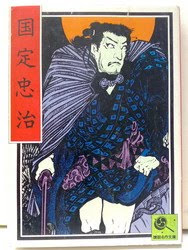
Kunisada Chuji 国定 忠治
Kunisada Chuuji

Kunisada Chūji (国定 忠治) (1810-1851)
His real name was Nagaoka Chuujiroo 長岡忠次郎.

CLICK for original LINK ... f.hatena.je.jp

He was born in Gunma prefecture 群馬県伊勢崎市国定町, into a noble home.
He later became a gambler and yakuza and roamed the area of Shinshu and Mount Akagi 赤城山南麓. He killed some officials, who were after him, like 島村伊三郎 and 玉村の主馬 and the detective Kansuke from Edo, 三室勘助.

He was put to death by crucification on January 22, 1851, together with 12 of his underlings (kobun 子分"children" ). The place was surrounded by heavy bamboo fences and 300 officers stood gard, because they feared his friends would come to his rescue. More than 1500 local people had gathered, to see the "noble gambler" get his official punishment. He was pierced by 15 spears before he finally died. Then his head was cut off and paraded through the area (sarashi kubi 晒し首).

After his death, legends began to build around this "noble yakuza" and he became more of a local hero. At the place of his punishment 大戸関所, a Jizo statue was errected to pacify his soul. When people offered incense there, their own illness of palsy would heal (since Chuji also suffered from palsy).
Or they would win in gambling (like Chuji).
Songs were written about Chuji and Mount Akagi and movies were cast with the popular hero.


国定忠治は鬼より怖い、にっこり笑って人を切る
Kunisada is more develish than the devil.
He smiles when he kills a person.


A group in his memory

忠治だんべ会
. . . CLICK here for Photos !


Kitajima Saburo is famous for his performance.
北島三郎

CLICK for original LINK

Isezaki Chuji
伊勢崎ってえば国定忠治だんべ


:::::::::::::::::::::::::::::::::::::::::::::::::::::::::::::::::::::::::::::::::::::::::::::::::::::


© More in the WIKIPEDIA !


His life as a good yakuza was made into many films, the most famous one with Mifune.


There are various stone memorials in his honor.
Two graves have been provided for him.

One is at temple Yoojuji 養寿寺.
. . . CLICK here for Photos !

He is also celebrated at temple 善應寺 as 遊道花楽居士 in Isezaki Town.
群馬県伊勢崎市国定町


He once hid in a cave, now the famous
忠治の岩屋 Chuji no Iwaya
CLICK here for PHOTOS !


:::::::::::::::::::::::::::::::::::::::::::::::::::::::::::::::::::::::::::::::::::::::::::::::::::::


Kunisada Chuuji Jizoo 忠治地蔵 Chuji Jizo

Various places claim this honor.


People from Akagi placed an old Jizo statue on his memorial place and clad the statue in the typical straw hat and falling robe of a yakuza.

When Chuji was in charge of the area of Akagi during the famines, he used his own money to provide food for the farmers and was well loved. He was kind of the famous "Robin Hood" of his area. They still honor his memory to this day.

famine of Tempo 天保の大飢饉

His famous last words were

赤城の山も今宵限りか
Akagi no yama mo koyoi kagiri ka


赤城の山も今夜を限り
生まれ故郷の国定の村や
縄張りを捨て国を捨て
可愛い子分のてめえ達とも
別れ別れになる首途(かどで)

CLICK for more photos
吾妻郡東吾妻町大戸


CLICK for original LINK


Now tourist buses come to this Jizo spot and souvenir shops flank the approach to it along the Old Road to Shinshu (Shinshuu kaidoo 信州街道).


There is also an old cherry tree near the memorial place.


忠治地蔵の桜 Chuji Jizo no Sakura
 吾妻郡東吾妻町大戸 Oodo (Odo)


:::::::::::::::::::::::::::::::::::::::::::::::::::::::::::::::::::::::::::::::::::::::::::::::::::::


Scarecrow like Chuji 国定忠治かかし


:::::::::::::::::::::::::::::::::::::::::::::::::::::::::::::::::::::::::::::::::::::::::::::::::::::


CLICK for more Kokeshi dolls of Chuji !

:::::::::::::::::::::::::::::::::::::::::::::::::::::::::::::::::::::::::::::::::::::::::::::::::::::


桑の実や忠治の墓へ駅3分      
kuwa no mi ya Chuuji no haka e eki sanpun

the grave of Chuji
is three minutes from the station -
oh these mulberries

Rakuga 楽可


WKD : Mulberry and silk related KIGO
Mulberry leaves were used to feed the silkworms, and the area of Chuji was famous for its silk production.


:::::::::::::::::::::::::::::::::::::::::::::::::::::::::::::::::::::::::::::::::::::::::::::::::::::


... ... ... Jizo Bosatsu 地蔵菩薩

. kyookaku 侠客 Kyokaku, "chivalrous Yakuza" .


Daruma Pilgrims in Japan

O-Fudo Sama Gallery

:::::::::::::::::::::::::::::::::::::::::::::::::::::::::::::::::::::::::::::::::::::::::::::::::::::::::::::::::::::::::::

[ . BACK to DARUMA MUSEUM TOP . ]
[ . BACK to WORLDKIGO . TOP . ]

:::::::::::::::::::::::::::::::::::::::::::::::::::::::::::::::::::::::::::::::::::::::::::::::::::::::::::::::::::::::::::

10/26/2009

Torii Gate

[ . BACK to DARUMA MUSEUM TOP . ]
. torii 鳥居と伝説 Shrine gate legends .

:::::::::::::::::::::::::::::::::::::::::::::::::::::::::::::::::::::::::::::::::::::::::::::::::::::

Daruma Pilgrims Gallery

:::::::::::::::::::::::::::::::::::::::::::::::::::::::::::::::::::::::::::::::::::::::::::::::::::::

Torii 鳥居
Gate of a Shinto Shrine


CLICK for more photos

source : JAANUS

Also written 鳥栖; 鶏栖. Lit. bird perch. At one time torii were called uefukazu-no-mikado; uefukazu-no-gomon 於上不葺御門 (literally, a roofless gate.) The use of the honorific mi, go 御 allows the conclusion that such a "gate" was associated with Shinto shrines. An open gatelike structure composed of two posts or pillars, (*hashira 柱), connected by a top lintel, *kasagi 笠木. Occasionally the structure was strengthened by a secondary or collateral lintel, *shimagi 島木, attached to the underside of the top lintel with a tie beam, *nuki 貫, placed below the lintels at a distance about equal to the diameter of the pillar. This distance had much greater variation before the 17th century. Exceptions are torii mon such as found at Oomiwa Shrine 大神神社, in Nara prefecture, or at Wakamiya 若宮 of Kasuga Shrine 春日大社, in Nara, which have portals hung between the pillars. Torii are usually erected at all entrances to a Shinto shrine to separate the hallowed precinct from its secular surroundings. They also serve to distinguish Shinto shrines from Buddhist temples. With the rise of Buddhist-Shinto syncretism in the 12th century, Shinto shrines began to appear within the grounds of Buddhist temples. Even then torii were used to mark the entrances to such shrines.

The origin of torii is unclear. Some scholars believe that the form derives from the torana gates found at the four points of the compass in the fence surrounding the Great Stupa at the monastery of Sanchi near Bhopal in central India. Other scholars believe that they are related to the bairou 牌楼 in China or the kousenmon 紅箭門 in Korea. Furthermore, the Chinese kahyou 華表 or 花表 sometimes has been translated into Japanese as torii, but it is quite different. The SHOUKAHITSUYOUKI 匠家必用記 (1775) states that the kahyou is not the same as the Japanese torii. It has generally been accepted that torii were already in use by the late 8c because of information given in RUIJUUJINGIHONGEN 類聚神祇本源, Gathering Material on the Origin of Shinto, compiled in 1320. However, there is reason to doubt its reliability because mention is made of a *haiden 拝殿 which did not exist until the 10c and it was not called a haiden until the late 12th or early 13c. Instead, the IZUMO NO KAMI OOTORI JINJA RUKICHOU 和泉国大鳥神社流記帳, The Inventory of the Properties of Ootori Jinja 大鳥神社 in Izumo dated 922, mid-Heian period, is considered an accurate record and torii are mentioned. Therefore, it is certain torii were common by the mid-Heian period.

There is a possibility that torii originated in Japan. They may have developed slowly beginning in very ancient times before shrine buildings were deemed necessary. First, four posts may have been placed in the four corners of a sacred area and rope tied from one to the other to designate the boundaries separating the sacred from the mundane. The next step would have been to place two taller posts at the center of the most auspicious direction to form an entrance for the priest. Rope would then have been stretched from post top to post top. An example of two pillars connected only by a rope shimenawa 注連縄 can be seen today in front of the worship hall *haiden 拝殿 at Oomiwa Shrine 大神神社, in Nara prefecture. The use of the rope remains a way of denoting a hallowed place.

Eventually, the rope was replaced by a wooden lintel. Because the structure was weak with only one lintel, a tie beam was added somewhat below the lintel and the simplest *shinmei torii 神明鳥居 came into being. The corner posts around the sacred area became true fence posts to support a simple wooden fence itagaki 板垣. Thus, the entire precinct was permanently enclosed. See *kaki 垣 fence. Wood is still commonly used for small torii, and the oldest extant example 1535 is the *ryoubu torii 両部鳥居 at Kubohachiman Shrine, in Yamanashi prefecture.

The oldest example in stone, widely used until recently for its durability, is found at Hachiman Jinja, Yamagata prefecture and dates from around the middle of the 12th c. Occasionally, torii are made with copper sheeting placed over a wooden core. The oldest extant, dated 1455-1457, is a *myoujin type at the temple, Kimpusenji 金峯山寺, in Nara prefecture. Many torii which may have originally been made of wood have been replaced by stone or reinforced concrete.

Although there are an infinite variety of torii named for unique characteristic, or for the name of the shrine itself, basically all torii can be classified under two major categories: those with straight members, shinmei torii 神明鳥居, and those with curved members, *myoujin torii 明神鳥居. In both cases the terms are loosely applied to torii which fit these simple descriptions. However, shinmei and myoujin also refer to specific styles of torii. 1) Torii with straight members: *shinmei torii 神明鳥居; *ise torii 伊勢鳥居; *kasuga torii 春日鳥居; *hachiman torii 八幡鳥居; *kashima torii 鹿島鳥居; *kuroki torii 黒木鳥居. 2) Torii with curved members: myoujin torii 明神鳥居; *inari torii 稲荷鳥居; *sannou torii 山王鳥居; *miwa torii 三輪鳥居; *ryoubu torii 両部鳥居; *mihashira torii, mitsuhashira torii 三柱鳥居. Three famous myoujin type torii with some noticeably unique characteristics are referred to by the name of their shrines: shitennouji ishi torii 四天王寺石鳥居; *usa torii 宇佐鳥居; and *hakozaki torii 筥崎鳥居.

Before the Premodern period (1568-1868), the proportion of parts of torii varied greatly. From the end of the 16th c. general dimensions were prescribed: the diameter of pillars should be about equal to 1/10 the distance from pillar center to pillar center. According to the SHOUMEI 匠明, Five Secret Books for Master Carpenters, (1608) Edo period, the height of the pillar from the ground to the underside of the tie beam must be determined by a square constructed from the edges of the pillars. A circle is then inscribed. The underside of the tie beam coincides with the upper most perimeter of the circle. The projection of the tie beam is calculated by dividing its length into 3rds from pillar center to pillar center. The ends of the tie beams should project 1/3 of that length. The slanted cuts *tasukizumi 襷墨 on the ends of the lintels are determined by a line projected, nagarezumi 投墨, from the bottom center of the pillar to the upper or lower corners, *uwakado 上角 or *shitakado 下門, of the tie beam.


On this link, you find the illustrations to the above text and much more about Japanese Architecture.
source : JAANUS

:::::::::::::::::::::::::::::::::::::::::::::::::::::::::::::::::::::::::::::::::::::::::::::::::::::


Taro Inari shrine in Taura, Asakusa, by moonlight. 1881
浅草田甫太郎稲前

Kobayashi Kiyochika 小林清親(1847-1915)


Shinto Shrines with a Gate (torii, tori-i)

Simplicity was the essence of the earlier Shinto shrines in Japan. The natives believe that the Japanese kami (gods) inhabit all natural phenomena such as volcanoes and rocks; these sacred places were thus marked with only a shimenawa (special plaited rope) and gohei (strips of white paper). The shimenawa will lead one to fences and on to the torii gates, which are now common features of a shrine.

The architecture of these shrines comes in many varieties, but most were developed from storehouses and dwellings of prehistoric Japan. A pair of komainu (stone 'lion') guards the main path leading to the shrine. One will have its mouth open in a roar while the other has its mouth closed.

Read more here
http://www.marimari.com/content/japan/best_of/architecture/main.html

:::::::::::::::::::::::::::::::::::::::::::::::::::::::::::::::::::::::::::::::::::::::::::::::::::::

The mystery of Oiwa
a highly decorated torii


- source : Green Shinto -


:::::::::::::::::::::::::::::::::::::::::::::::::::::::::::::::::::::::::::::::::::::::::::::::::::::


torii kuguri 鳥居潜り walking through a Shinto torii gate

The Torii stands at the border of the sacred compound. Before entering, you stop before the gate and make one deep bow. Be aware that you are now entering a sacred compound and be greatful for this.
The middle part of the access road from the torii to the shrine is reserved for the deities, so you should not walk in the middle. After bowing, proceede to the right or left and pass the gate.
Walk toward the hand-washing basin (手水 choozu) and cleanse hand, mouth and mind.

. mini torii kuguri ミニ鳥居潜り
crawling through a small torii gate .

while making a wish for health, wealth and family.


:::::::::::::::::::::::::::::::::::::::::::::::::::::::::::::::::::::::::::::::::::::::::::::::::::::


. gankake torii 願掛け鳥居
Torii miniature to make a wish .

Fushimi Inari Taisha Shrine 伏見稲荷大社


:::::::::::::::::::::::::::::::::::::::::::::::::::::::::::::::::::::::::::::::::::::::::::::::::::::

Reference : Torii of Japan


121 concrete torii gate
Torii in spring


Why would Daruma be interested in Shinto shrines, you ask?
Well, they sell many talismans and amulettes of Daruma san and at some shrines, there is even a Daruma Market during the New Year Days.

:::::::::::::::::::::::::::::::::::::::::::::::::::::::::::::::::::::::::::::::::::::::::::::::::::::


source : facebook

Another use for a torii !

:::::::::::::::::::::::::::::::::::::::::::::::::::::::::::::::::::::::::::::::::::::::::::::::::::::

source full size : Artes Gráficas EU

:::::::::::::::::::::::::::::::::::::::::::::::::::::::::::::::::::::::::::::::::::::::::::::::::::::

- TORII - See my Photo Album

:::::::::::::::::::::::::::::::::::::::::::::::::::::::::::::::::::::::::::::::::::::::::::::::::::::

mihashira torii 三柱鳥居 three-pillar torii

. Konoshima Jinja 木嶋神社 .
and the Korean connectin to the Hata clan (秦氏)
- quote -
Also called mitsubashira torii 三柱鳥居 or sankaku torii 三角鳥居.
A gate-like structure *torii 鳥居, with a third post to form a triangle rather than the usual two posts. The torii has three top lintels *kasagi 笠木, collateral or secondary lintels *shimaki 島木, and tie beams *nuki 貫, all of which are connected to hold the three pillars together.
When viewed directly from any side, the mihashira torii is shaped like an ordinary simple *myoujin torii 明神鳥居. The origin of this torii is unknown. There is only one example on public view located at Uzumasa 太秦, Konoshima Jinja 木島神社 in Kyoto. Shrine records indicate that the torii was restored sometime during the decades between 1716-36 when the shrine building itself was rebuilt after a fire. The torii stands in a pond, and in its center is a pile of stones believed to be the seat of a god. The records also state that the three pillars symbolize the heavens, earth and mankind.

There is also a reference in the record which asserts that this torii had a connection with Nestorianism, Keikyou 景教, an ancient Christian sect which thrived for about 800 years in the Near East and Central Asia. It is possible that the three pillared torii may have had a Christian connotation. In a private garden in Kyoto, also erected in a stream, is a small three pillared torii. The Christian owners maintain that they descend from an ancient lineage of hidden Christians who used this torii during a period when the prohibition of Christianity was strictly enforced: 1616-1868. They declare that the three pillars represent the Christian belief of the Holy Trinity. It cannot be absolutely proven that this was really the origin. Nevertheless, the possibility exists because even the records of the shrine at Uzumasa, claim that the three-pillared torii, among other things, is said to symbolize faith, hope and charity.
- source : JAANUS


:::::::::::::::::::::::::::::::::::::::::::::::::::::::::::::::::::::::::::::::::::::::::::::::::::::::::::::::::::::::::::


Torii are also found at the entrance of sanctuaries dedicated to the group of TEN 天部, the devas, many of them coming as deities from India.

Torii in front of a Benten sanctuary are very popular.

. Benzaiten 弁財天, Benten 弁天 Benzai-Ten .


:::::::::::::::::::::::::::::::::::::::::::::::::::::::::::::::::::::::::::::::::::::::::::::::::::::::::::::::::::::::::::

H A I K U

CLICK for more photos
Torii from Uji Shrine 宇治神社


宇治川に臨む鳥居の飾かな
Ujigawa ni nozomu torii no kazari kana

the decoration
of the shrine gate overlooking
river Ujigawa


Nomura Hakugetsu 野村泊月
(1882 - 1961)
Tr. Gabi Greve


River Uji (called River Yodo, 淀川, Yodogawa in Kyoto) is famous for fishing and the autumn leaves.
It also features in the "Tales of Genji".


:::::::::::::::::::::::::::::::::::::::::::::::::::::::::::::::::::::::::::::::::::::::::::::::::::::


stowing down
river at Torii gate-
lonely goose

river at Torii
lonely goose flaps down;
nude branch welcomes

decaying branch
wailing river at Torri;
hungry goose flaps down

© Aju Mukhopadhyay, India 2009


:::::::::::::::::::::::::::::::::::::::::::::::::::::::::::::::::::::::::::::::::::::::::::::::::::::

. Shrine, Shinto Shrine (jinja) .

Shimenawa 注連縄

. Mon 門 gate of a Buddhist Temple
sanmon 山門 "mountain gate" 
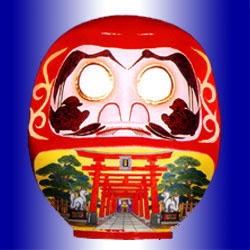

CLICK fo go to Fushimi Shrine
Daruma with Torii on this belly
source : www.mizuho-g.com

- one more ! -
. Daruma plate with torii ! .


Daruma boulder below a torii


source : shizufan.jp

Darumadera in Izu

:::::::::::::::::::::::::::::::::::::::::::::::::::::::::::::::::::::::::::::::::::::::::::::::::::::::::::::::::::::::::::

. torii 鳥居と伝説 Shrine gate legends .

Daruma Pilgrims in Japan

O-Fudo Sama Gallery


[ . BACK to DARUMA MUSEUM TOP . ]
[ . BACK to WORLDKIGO . TOP . ]
:::::::::::::::::::::::::::::::::::::::::::::::::::::::::::::::::::::::::::::::::::::::::::::::::::::::::::::::::::::::::::

10/24/2009

Exhibition Museum Koeln

[ . BACK to DARUMA MUSEUM TOP . ]

:::::::::::::::::::::::::::::::::::::::::::::::::::::::::::::::::::::::::::::::::::::::::::::::::::::

Daruma Pilgrims Gallery

:::::::::::::::::::::::::::::::::::::::::::::::::::::::::::::::::::::::::::::::::::::::::::::::::::::


Exhibition

Das Herz der Erleuchtung.
Buddhistische Kunst aus China (550-600)


Museum für Ostasiatische Kunst, Köln
17. Oktober 2009 bis 10. Januar 2010

Die Ausstellung zeigt Tuscheabreibungen von monumentalen Texten, die fromme Buddhisten während der Nördlichen Qi-Dynastie auf Felsen in den Bergen meißelten. Das grandiose Projekt entsprang dem Wunsch, die diesseitige Welt in eine buddhistische Topographie zu verwandeln.
Präsentiert werden neben den Abreibungen auch Steinskulpturen derselben Periode. Stücke aus dem Altbestand des Kölner Hauses geben zusammen mit Leihgaben des Museums Rietberg Zürich und privaten Leihgaben Einblick in eine der großen Blüteperioden buddhistischer Steinskulptur in China.

Im Kontext der erst seit einigen Jahren erforschten Felseninschriften erscheinen die durch den Museumsgründer Adolf Fischer (1857-1914) erworbenen Schätze in neuem Licht. Sie sind ein Vermächtnis, das zu immer wieder neuen Fragestellungen auffordert. Die Ausstellung wurde in Zusammenarbeit mit dem Institut für Kunstgeschichte Ostasiens in Heidelberg, der Heidelberger Akademie der Wissenschaften und in Kooperation mit dem Amt für Denkmalpflege der Stadt Zoucheng, Provinz Shandong erarbeitet.
source : museum-fuer-ostasiatische-kunst

Adele Schlombs, Director, Museum of East Asian Art, Cologne

Lothar Ledderose
professor of the History of Art of Eastern Asia at the University of Heidelberg


The Heart of Enlightenment
Buddhist Art in China


The exhibition presents ink-rubbings of monumental texts which devout Buddhists chiselled into rocks in the mountains of Shandong province during the Northern Qi dynasty. The aim of this grand project was to transform the world into a Buddhist topography. Alongside these rubbings, the exhibition also presents Buddhist stone sculpture from the same period. Most of the exhibits from the collection of the Cologne museum were acquired by its founder, Adolf Fischer. Together with loans from the Museum Rietberg Zurich and loans from private collections they provide an insight into one of the great periods of Buddhist stone sculpture in China.
Research of these rock inscriptions started only a few years ago.
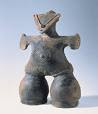
They cast a new light on the sculpture of that period. Computer animations in the exhibition give the visitor an opportunity to roam the mountains of Shandong province and to locate the inscriptions and rubbings, or to read the Buddhist texts. The exhibition was organised in collaboration with the Institute of East Asian Art History, Heidelberg University, the Heidelberg Academy of Sciences and in cooperation with the Department of Historical Monuments of the City of Zoucheng in Shandong province.
source : www.museenkoeln.de


. . . CLICK here for Photos !
"Museum für Ostasiatische Kunst"


:::::::::::::::::::::::::::::::::::::::::::::::::::::::::::::::::::::::::::::::::::::::::::::::::::::


CLICK for more photos / in German


The Northern Qi Dynasty (Chinese: 北齊)
was one of the Northern dynasties of Chinese history and ruled northern China from 550 to 577.
© More in the WIKIPEDIA !


. . . CLICK here for Photos of Northern Qi Art !

:::::::::::::::::::::::::::::::::::::::::::::::::::::::::::::::::::::::::::::::::::::::::::::::::::::


Professor Ledderose was the successor of my teacher,
Professor Seckel, at Heidelberg University.


Buddhastatuen ... Who is Who
Ein Wegweiser zur Ikonografie
von japanischen Buddhastatuen
by Gabi Greve, 1994
With a Review by Prof. Dietrich Seckel


Daruma Pilgrims in Japan

O-Fudo Sama Gallery

:::::::::::::::::::::::::::::::::::::::::::::::::::::::::::::::::::::::::::::::::::::::::::::::::::::

10/22/2009

Sue Sarasa Museum

[ . BACK to DARUMA MUSEUM TOP . ]

:::::::::::::::::::::::::::::::::::::::::::::::::::::::::::::::::::::::::::::::::::::::::::::::::::::

Daruma Pilgrims Gallery

:::::::::::::::::::::::::::::::::::::::::::::::::::::::::::::::::::::::::::::::::::::::::::::::::::::

Sue Sarasa Museum of Art 寿恵更紗ミュージアム

京都府向日市 Kyoto, Muko-shi
Terado-Cho, Terayama 12-1
Tel. 075-934-6395

Founded by Aoki Sue 青木寿恵


sarasa サラサ calico, chintz, printed cotton
also a kind of batik
Originally from India, the stencil-dying method (katazome) was later imported to Japan during the Edo-Period. Mineral pigments are applied to homespun cotton, using various stencils.
Sarasa was produced mainly in Sakai, Kyoto and Nagasaki.

. . . CLICK here for Japanese sarasa Photos !


. . . CLICK here for international sarasa Photos !


:::::::::::::::::::::::::::::::::::::::::::::::::::::::::::::::::::::::::::::::::::::::::::::::::::::


Exhibition with nature motives from Canada
October 10 till November 18, 2009

Aoki san had been to Canada in 1979 and sketched much of the landscape and other motives there.

The exhibition includes Kimono, tapestries, obi, door curtains and other items.


:::::::::::::::::::::::::::::::::::::::::::::::::::::::::::::::::::::::::::::::::::::::::::::::::::::


Textiles from sarasa were also called
watarai わたらい【度会】
The material was also used to make small items, like bags and cloth for the tea ceremony.


chirimen 縮緬 (ちりめん) crepe silk from China
Used as material for expensive kimono.

:::::::::::::::::::::::::::::::::::::::::::::::::::::::::::::::::::::::::::::::::::::::::::::::::::::::::::::::::::::::::::


Edo Sarasa 江戸更紗 Printed Silk Calico

■ Traditional Technologies and Techniques
1- 型紙 - Handmade Japanese paper )tesukewashi 手漉和紙) is treated with a preparation of persimmon juice and matched with a backing paper in order to become stencil paper; designs are carved using separate but similar backing paper (These are then overlaid the stencil paper for stenciling).
2- 型摺り染め - Stencil dyeing is done by hand.
3- 地染め - A brush dyeing technique called hikizome 引き染め is used to dye textiles completely with their base colors.
4- 捺染糊 Natsusennori (a paste mixture) comprised of glutinous rice flour, rice bran and salt, etc., is also used. This is a dye-proof preparation. Areas of textiles treated with this paste will remain their original color when dyed.


■ Traditionally Used Raw Materials
Cotton textiles, Silk textiles - 綿織物、絹織物

■ History and Characteristics
Sarasa 更紗 originated more than 3,000 years ago in India. The techniques involved in its production are said to have spread west to Europe and east to China. They were introduced to Thailand and Indonesia, subsequently crossing the seas to arrive in Japan.

“Sarasa” is a common terminology used throughout the world.

It is said that Sarasa arrived in Japan during the Muromachi Period (1336-1573), with products from India and Europe being brought by foreign merchant vessels from Portugal, Spain and Holland. The Japanese referred to these ships as Nanbansen 南蛮船 and Komosen 紅毛船.

The bulk of clothing in Japan at the time was made from silk or hemp; people were both surprised and pleased with the qualities of cotton, it being a textile they had previously known nothing about.

The attraction of Sarasa is the colorful patterns that can be created by dyeing it in five different tones (dark reds, indigo blues, greens, yellows and browns).
五彩 -(臙脂(えんじ)、藍、緑、黄、茶)

In that the exoticism of such countries differs from the Japanese traditions associated with homegrown textiles such as those produced using some-komon 染め小紋 (fine-patterned dyeing) and yuzen 友禅 (painted dyeing) techniques, people may have a somewhat exotic image of Sarasa that reflects the natural traits of its origin countries.

It is said that Edo Sarasa was born in the second half of the Edo Period. The water of Tokyo, including that of the Kanda River, is considered to be a relatively “hard water” (with a high mineral content). Thus, the iron content present in the water produces ongoing chemical reactions until dyeing processes are completed. The outcome of this is a tendency towards sober hues being produced.

It is through this that the austere elegance unique to Edo Sarasa is created, and the colors realized tend to offer a sense of wabi-sabi (a sense of “simplicity and refinement”).

Presently, only Tokyo boasts a reasonable population of Sarasa producers.

Tokyo Order-Made Dyeing Association
- source : www.sangyo-rodo.metro.tokyo.jp


. Traditional Crafts of Tokyo and Edo .


source : www.mfa.org/collections

Kappa in a Shop of Stencil-dyed Goods, from the series Collection of Equipment of Merchants (Akinai dôgu shû no uchi)
「商内道具集之内(あきないどうぐしうのうち)」
「御合羽品々」 (合羽品の店に河童)

by Issunshi Hanasato ga 一寸子花里画

There is an implied pun on kappa “river monster” and kappa “stencil.”

:::::::::::::::::::::::::::::::::::::::::::::::::::::::::::::::::::::::::::::::::::::::::::::::::::::

Cotton (wata) kigo for haiku

Kimono, traditional Japanese robes

light cotton robes, yukata 浴衣 ゆかた


.................................................................................

- - - kigo with SARASA さらさ 

Sarasa boke 更紗木瓜 Sarasa quince

Sarasa mokuren (更紗木蓮) Sarasa Magnolia

Sarasa yanma 更紗やんま Sarasa yanma, dragonfly


::::::::::::::::::::::::::::::::::::::::::::::::::::::::::::::::::::::::::::::::::::::::::::::::::::: 

[ . BACK to WORLDKIGO . TOP . ]
[ . BACK to DARUMA MUSEUM TOP . ]

- #sarasa #chintz #chinz -
::::::::::::::::::::::::::::::::::::::::::::::::::::::::::::::::::::::::::::::::::::::::::::::::::::: 

10/21/2009

Soga Monogatari

[ . BACK to DARUMA MUSEUM TOP . ]
:::::::::::::::::::::::::::::::::::::::::::::::::::::::::::::::::::::::::::::::::::::::::::::::::::::

Daruma Pilgrims Gallery

:::::::::::::::::::::::::::::::::::::::::::::::::::::::::::::::::::::::::::::::::::::::::::::::::::::

Soga Monogatari - 曾我物語
The Story of the Soga Brothers - 曽我兄弟
そがものがたり

CLICK for more photos


The Soga Monogatari, or Tale of Soga,
is a warrior tale based on the story of Kudo Saemon Suketsune who, on order to get the inheritance of his uncle Ito Sukechika, had his cousin Kozu Saburo Sukemichi murdered in 1175. Eighteen years later, on the 18th day of the Fifth month of 1193, Sukemichi's two sons,
Juro Sukenari (1172-93) and Goro Tokimune (1174-93), killed Suketsune during a hunting party on Mt. Fuji.
Juro was killed in the ambush but Goro was captured. Although Shogun Minamoto no Yoritomo (1147-99), applauding the brothers' bravery and loyalty, wanted to pardon Goro, Suketsune's son demanded and got his execution.

The tale focus on the conflict between the shogunal authority and the brothers loyalty to their father, highlighting the clash between the brothers' heroic vendetta and the feudal system which condemns them. The story was extremely popular in the Edo era and it was adapted for Nô, Bunraku and Kabuki, where several hundreds plays based on the Soga world were written and performed in Edo for centuries. It is still a custom in Kabuki to perform at least one sogamono every New Year.

Of all these play the Soga no Taimen (The Soga Brothers' Audience with their Enemy or Confrontation), from an anonymous playwriter and first performed in 1676, became the most popular.
source : www.man-pai.com


歌川広重「曽我物語図絵」
Utagawa Hiroshige : Soga monogatari zue

Pictures of the Soga brothers story of revenge


. . . CLICK here for many prints of Hiroshige !


曽我の傘焼まつり Festival
Soga no Kasayaki Matsuri
Burning the umbrellas of the Soga brothers

Festival in Odawara, Soga-danitsu, Temple Joozen-Ji
小田原市曽我谷津592 城前寺
. . . CLICK here for Photos !


:::::::::::::::::::::::::::::::::::::::::::::::::::::::::::::::::::::::::::::::::::::::::::::::::::::


Tora Gozen 虎御前(とらごぜん) Lady Tora
安元元年(1175 - ?)
Ooiso no Tora 大磯の虎 Lady Tora from Oiso
Lady Tora, Lady Tiger
She was born in the year of the tiger, on the month of the tiger at the hour of the tiger, hence her name, says the legend. (Reality says she was born in the year of the sheep.)

She was a prostitute and the lover (some say, the wife) of Juro.
After his death, she became a nun and spend her life praying for his and his brothers soul. After a pilgrimage to famous temple Zenkoji 善光寺 in Shinshu (near where Issa lives later on ) she went back to Oiso to the temple Koraiji-San 高麗寺山 in Hiratsuka / Oiso near Komayama 高麗山(こまやま).


CLICK for original LINK and more photos
安藤広重 Ando Hiroshige, Tora ga Ame


Tora ga Ame 虎ケ雨 / 虎が雨 Tears of Lady Tora
She cried on the death of Juro (Juuro 十郎) on May 28.
It rains in Oiso town every year on the 28th of May.


CLICK for original LINK
歌川広重 Utagawa Hiroshige, Toragozen


:::::::::::::::::::::::::::::::::::::::::::::::::::::::::::::::::::::::::::::::::::::::::::::::::::::


H A I K U

kigo for the New Year

hatsu soga 初曽我 First Soga Performance

Kabuki and Haiku

.................................................................................

kigo for mid-summer

tora ga ame とらがあめ【虎が雨】 "rain of Lady Tora"
tora ga namida ame 虎が涙雨(とらがなみだあめ)tears of Lady Tora
Soga no ame 曽我の雨(そがのあめ) "rain of the Soga"


. . ..... Soga matsuri 曽我祭(そがまつり)
festival of the Soga brothers  

Satsuki kyoogen 五月狂言 (さつききょうげん)
Kyogen in the fifth lunar month
..... 皐月狂言(さつききょうげん) 


Soga no kasayaki 曽我の笠焼 (そがのかさやき)
Soga brothers burning their paper umbrellas

Sogadon no kasayakai 曽我どんの傘焼(そがどんのかさやき / そがどんの傘焼き)
Umbrella Burning Festival

On the 28th day of the fifth lunar month in 1193, the Soga brothers burned their paper umbrellas, used them as torches on the way down from Mount Fuji to fight the enemy.
Festivals are held on this day, for example in Odawara and in Kagoshima.
It is one of the three great festivals in Kagoshima, where it is celebrated on the fourth Saturday in July, along the river Kotsukigawa 甲突川. It has a long tradition in Kagoshima, former Satsuma han.

.................................................................................

. Hekinan - Ohama clay dolls 碧南大浜土人形 Aichi .


曽我十郎 Soga Juro clay doll
about 31 cm high. Made by 美濃部 泰作 Minobu Daisaku


:::::::::::::::::::::::::::::::::::::::::::::::::::::::::::::::::::::::::::::::::::::::::::::::::::::


兄弟のかほ見るやミや時鳥 
kyoodai no kao miru yami ya hototogisu
kyoodai ga kao miawasu ya hototogisu

A 'hototogisu' called;
The brothers turned
And looked at each other.


Kyorai 去來
trans. Blyth

Blyth explains that this is based on a well-known revenge story involving the Soga brothers. Blyth then says:

"Here Kyorai imagines the two brothers as they approach the tent of Suketsune [upon whom they are seeking revenge]. A 'hotototgisu' suddenly cries, as if in omen of the coming death, and the two brothers instinctively turn their faces to each other in the darkness."
source : translatinghaiku


去來曰、
是句ハ五月廿八日夜、曾我兄弟の互に貌見合ける比、時鳥などもうちなきけんかしと*、源氏の村雨の軒端にたゝずび給ひしを、紫式部がおもひやりたるおもむきをかりて*、一句を作 れり。先師曰、曾我との原の事とハきゝながら、一句いまだ謂おほせず*。其角が評も同前なりと、深川より評有。許六曰、此句ハ心餘りて詞たらず。去來曰、心餘りて詞不足といハんハはゞかり有。たゞ謂不應也*。丈草曰、今の作者ハさかしくかけ廻りぬれバ、是等ハ合點の内成べしと、共に笑ひけり。

source : www2.yamanashi-ken.ac.jp


:::::::::::::::::::::::::::::::::::::::::::::::::::::::::::::::::::::::::::::::::::::::::::::::::::::


誠なき里は降ぬか虎が雨
makoto naki sato wa furanu ka tora ga ame

it does not fall
on this insincere village -
Rain of Lady Tora


としよりのおれが袖へも虎が雨
toshiyori no ore ga sode e mo tora ga ame

on the sleeve
of this old man too -
Rain of Lady Tora


Kobayashi Issa

* the sleeve of a kimono served as a hankerchief in olden days and is used as a symbol for shedding tears, wiping them with the sleeve of a kimono, especially done by the ladies in the old love stories.


.................................................................................


寝白粉香にたちにけり虎が雨
ne-oshiroi ka ni tachi ni keri tora ga ame

the fragrance
of her white night powder -
Rain of Lady Tora


Hino Soojoo 日野草城


Tr. Gabi Greve

:::::::::::::::::::::::::::::::::::::::::::::::::::::::::::::::::::::::::::::::::::::::::::::::::::::


歌川広重「大磯 虎ヶ雨」
- source : The Adachi Institute of Woodcut Prints -

:::::::::::::::::::::::::::::::::::::::::::::::::::::::::::::::::::::::::::::::::::::::::::::::::::::

Tear, tears (namida) Japan. Träne, Tränen


Daruma Pilgrims in Japan

[ . BACK to WORLDKIGO  TOP . ]
:::::::::::::::::::::::::::::::::::::::::::::::::::::::::::::::::::::::::::::::::::::::::::::::::::::

10/01/2009

Dogu, doguu

[ . BACK to DARUMA MUSEUM TOP . ]
. haniwa 埴輪 Haniwa clay figures - Introduction .
:::::::::::::::::::::::::::::::::::::::::::::::::::::::::::::::::::::::::::::::::::::::::::::::::::::

Daruma Pilgrims Gallery

:::::::::::::::::::::::::::::::::::::::::::::::::::::::::::::::::::::::::::::::::::::::::::::::::::::

Dogu Clay Figures (doguu 土偶)

CLICK for more photos CLICK for english material

quote
Dogū (土偶, "clay idol / figurine")
are small humanoid and animal figurines made during the late Jōmon period (14,000 BC to 400 BC) of prehistoric Japan. Most of the humanoid figurines have the breasts, small waists, and wide hips of females and are considered by many to be representative of goddesses. Many have the large stomachs associated with pregnancy, suggesting that the Jomon considered them Mother Goddesses. According to the Metropolitan Museum of Art, these figurines "suggest an association with fertility and shamanistic rites". Made from clay, these figurines were never realistic, but, rather, were fashioned into fascinating shapes. The Dogū tend to have large faces, small arms and hands and compact bodies. Some appear to wear goggles or have 'heart-shaped' faces. Most have marks on the face, chest and shoulders, which suggest tattooing and probable incision with bamboo.

Dogū come entirely from the Jōmon period and do not continue to the Yayoi period. As for Jōmon pottery, Dogū has various styles by exhumation area and generation. According to the National Museum of Japanese History, the total number found throughout Japan is approximately 15,000. Most of the Dogū have been found in East Japan and it is rare to find one in West Japan.

The purpose of the Dogū remains unclear but, most likely, the Dogū acted as effigies of people, that manifested some kind of sympathetic magic. For example, it may have been believed that illnesses could be transferred into the Dogū, then destroyed, clearing the illness, or any other misfortune.

Shakōkidogū (遮光器土偶) Shakoki dogu
"shakōki" (literally "light-blocking device")
© More in the WIKIPEDIA !

:::::::::::::::::::::::::::::::::::::::::::::::::::::::::::::::::::::::::::::::::::::::::::::::::::::


CLICK for original LING

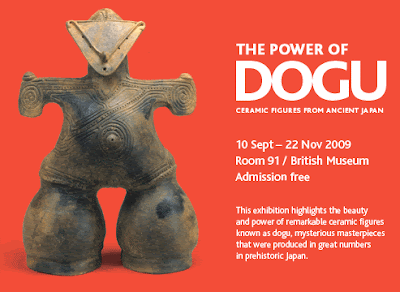
The Power of Dogu ...
Ceramic Figures from Ancient Japan


British Museum, Exhibition
September to November 2009

Reference


:::::::::::::::::::::::::::::::::::::::::::::::::::::::::::::::::::::::::::::::::::::::::::::::::::::


Haiku with DOGU


青北風や土偶三千年の黙
aokita ya doguu sanzennen no danmari

northwind out of the blue -
threethousand years of silence
of the clay figures


Yano Tadao 矢野忠男
(aokita is a kigo for autumn, a sudden northwind september and october)


土偶には土偶の使命草の花
doguu ni wa doguu no shimei kusa no hana

the doguu clay figures
have their own mission -
autumn wildflowers


Umeki Sachiko 梅本幸子


お藷蒸す土偶体形疎んずも 高澤良一 寒暑
この秋も会いに無名の土偶の眼 対馬康子 吾亦紅
ひなげしや土偶の乳房に指の跡 大木あまり 火球
みな古き世の色まとふしぐれ土偶 吉野義子
みひらきて秋の翳濃き土偶の目 平井伊都子
五千年も妊みて土偶緑さす 北川英子
人類の旬の土偶のおっぱいよ 池田澄子 たましいの話
優曇華や土偶の顔は皆笑ひ 宮坂静生 青胡桃
凍土もて間牒土偶の鼻こねり 石塚友二 光塵
向日葵は灼けて土偶のおほらかさ 高澤良一 素抱
囀や土偶に逞しき乳房 染谷佳之子
土偶の雛目鼻もわかず笑み給ふ 加倉井秋を
土偶みな掌に乗り土用東風 廣瀬直人「朝の川」
土偶見し眼にたたなはる雲の峯 高澤良一 素抱
山笑ふ土偶のやうに妊婦われ 仙田洋子
日鼻凍む土偶になせり愛しくてか 宮津昭彦
星流れ土偶の眼より波の音 菅野茂甚
春みぞれ土偶は四肢を張りづめに 鍵和田[ゆう]子 飛鳥
春寒く土偶のごとき欠伸して 行方克己 知音
月の出や女体土偶の身籠れる 辻美奈子
根城址にゆかりの土偶秋時雨 苫米地古北
涼しさの火より生れし土偶かな 小池きく江
父に似て母に似て土偶夏痩せぬ 宮坂静生 青胡桃
爽籟や土偶どれにも臍の穴 有馬朗人 知命
秋風に飛出て安き土偶の臍 野澤節子 遠い橋
縄文のみみづく土偶の口寒き 石原八束 『仮幻』以後
縄文土偶の乳房小さし春浅し 近藤一郎
胎の子に手を置く土偶あたたかし 林 ゐづ子
腿太き土偶に割れ目豊の秋 矢島渚男 延年
花冷えや火に洗はれし土偶の肌 野澤節子 遠い橋
芽立ち時土偶のかけらじゃがいもも 尾田秀三郎
菜の花や孕み土偶の深眠り 大森和子
蝉しぐれおーいと縄文土偶の子 岡崎万寿
遮光器土偶がふつと初笑 大森知子
闇のほか土偶は知らず母子草 柴田三津雄

source : HAIKUreikuDB
Tr. Gabi Greve


clay figurine from Gobara, Japan
source : flickr manarh


:::::::::::::::::::::::::::::::::::::::::::::::::::::::::::::::::::::::::::::::::::::::::::::::::::::

. haniwa 埴輪 Haniwa clay figures - Introduction .

:::::::::::::::::::::::::::::::::::::::::::::::::::::::::::::::::::::::::::::::::::::::::::::::::::::::::::::::::::::::::::

Daruma Pilgrims in Japan
O-Fudo Sama Gallery

[ . BACK to DARUMA MUSEUM TOP . ]
[ . BACK to WORLDKIGO . TOP . ]

:::::::::::::::::::::::::::::::::::::::::::::::::::::::::::::::::::::::::::::::::::::::::::::::::::::::::::::::::::::::::::