4/18/2007

Kyoto Sculptors

[ . BACK to DARUMA MUSEUM TOP . ]

:::::::::::::::::::::::::::::::::::::::::::::::::::::::::::::::::::::::::::::::::::::::::::::::::::::

Buddhist Sculptors Gallery

:::::::::::::::::::::::::::::::::::::::::::::::::::::::::::::::::::::::::::::::::::::::::::::::::::::


Kyoto Buddha Statues Workshop
Kyoto Butsuzoo Kooboo 京都仏像工房


〒602-8205 
京都市上京区中立売通り智恵光院東入
Look at the Store !


Click here to look at their work !
京都仏像工房


京都仏像工房 : about making statues


:::::::::::::::::::::::::::::::::::::::::::::::::::::::::::::::::::::::::::::::::::::::::::::::::::::

Seated Daruma


Standing Daruma


Japanese LINK
Kyoto Butsuzo Kobo


:::::::::::::::::::::::::::::::::::::::::::::::::::::::::::::::::::::::::::::::::::::::::::::::::::

BACK TO

Who made Buddha Statues ?
Mark Schumacher


Buddhist Sculptors Gallery


Daruma Pilgrims in Japan


:::::::::::::::::::::::::::::::::::::::::::::::::::::::::::::::::::::::::::::::::::::::::::::::::::::

- Jizo Bosatsu INTRODUCTION

[ . BACK to DARUMA MUSEUM TOP . ]
:::::::::::::::::::::::::::::::::::::::::::::::::::::::::::::::::::::::::::::::::::::::::::::::::::::::::::::::::::::::::::

Jizoo Bosatsu 地蔵菩薩 Jizo Bosatsu
Kshitigarbha


Introduction


Click on the PHOTO to see more statues.


Read the English details of this deity here please !
. . . . . Jizō Bosatsu . . . . .
Mark Schumacher

:::::::::::::::::::::::::::::::::::::::::::::::::::::::::::::::::::::::::::::::::::::::::::::::::::::::::::::::::::::::::::


. Join the Jizo Bosatsu Gallery - Facebook .

:::::::::::::::::::::::::::::::::::::::::::::::::::::::::::::::::::::::::::::::::::::::::::::::::::::::::::::::::::::::::::

Jizo Bosatsu 地蔵菩薩 - ABC List
of the Darumapedia Daruma Museum

. 地蔵菩薩 Jizo Bosatsu art motives Gallery .


Sekino Jun'ichiro (1914-1989)


. collecting - Jizo Bosatsu - Special Statues .

:::::::::::::::::::::::::::::::::::::::::::::::::::::::::::::::::::::::::::::::::::::::::::::::::::::::::::::::::::::::::::

riun Jizo bosatsu, ri-un 利運地蔵菩薩
Jizo to win in battle

in Kyoto 臨済宗天龍寺派の禅刹等持院 Toji-In, Kyoto
The special hall for Jizo used to be called
霊光殿 Reiko-Den
京都府京都市北区等持院北町63


足利尊氏の念持仏だった利運地蔵菩薩)と、その両脇に達磨大師像と夢窓疎石像

Ashikaga Takauji prayed here for victory, and so did Tokugawa Ieyasu.
Takauji had been born because his so far childless mother made a vow to Jizo and became pregnant after that. Therefore Jizo was his special protector deity.


source : ameblo.jp/bluedeloi


- quote
Tōji-in (等持院) is a Buddhist temple of the Rinzai Tenryū sect located in Kita Ward, Kyoto, Japan, and one of two funeral temples (bodaiji) dedicated to Ashikaga Takauji, first shogun of the Ashikaga dynasty. Its main object of worship is Shakyamuni, and its honorary sangō prefix is Mannenzan (萬年山).
Tōji-in was founded at the foot of Mount Kinugasa in 1341 by Takauji himself in fulfillment of a vow. He did so under the guidance of famous Zen teacher, calligraphist, poet and garden designer Musō Soseki, who created the Zen gardens and ponds of the temple. Tōji-in later became the Ashikaga dynasty's funeral temple and all fifteen of the Ashikaga shoguns are buried here.
- snip -
The Reikō-den


Jizo, Daruma and Soseki

Tokugawa Ieyasu and all the fifteen Ashikaga shoguns are enshrined in a small building called Reikō-den (霊光殿).
The sixteen statues are lined up in two rows on the sides of the room, each sitting and carrying a shaku symbolizing their shogunal power. Their sculptors are unknown, but they have been tentatively dated to the early seventeenth century. The presence among the Ashikaga shoguns of a statue of Tokugawa Ieyasu, founder of the Tokugawa shogunate, suggests that Tokugawa wished to link himself to the Ashikaga clan and give an impression of continuity between the two dynasties.
Like them, Ieyasu claimed to be a descendant of the Minamoto clan.
- source : wikipedia

. Ashikaga Takauji 足利尊氏 (1305 - 1358) .

:::::::::::::::::::::::::::::::::::::::::::::::::::::::::::::::::::::::::::::::::::::::::::::::::::::::::::::::::::::::::::

kutsubaki Jizo son 沓履地蔵尊 Jizo wearing shoes
at the temple Kuhonji 九品寺 Kuhon-Ji, Hanakawado, Asakusa, Tokyo

This is said to be the only statue with Jizo wearing shoes. The original statue was from the Heian period, made by the scholar . Ono no Takamura 小野篁 (802 - 852) . -
but was lost during the Great Kanto Earthquake in 1923. It was re-built in 1995.


- source : asakusanioideyo.com -

In Hanakawado there lived many craftsmen making straw sandals and other kinds of shoes (hakimono 履物) and this Jizo is their protector deity. Even now there are more than 70 shoe dealers in this district.

. Asakusa Hanakawadochoo 花川戸町 Hanakawado machi - Edo .

:::::::::::::::::::::::::::::::::::::::::::::::::::::::::::::::::::::::::::::::::::::::::::::::::::::::::::::::::::::::::::


..... ..... ..... H A I K U


なでしこや地蔵菩薩の跡先に
nadeshiko ya jizô bosatsu no ato saki ni

blooming pinks
behind and in front
of Saint Jizo


御地蔵の玉にもち添ふ李哉
o-jizô no tama ni mochi-sou sumomo kana

added to
Saint Jizo's jewel...
a plum


地蔵さへとしよるやうに木の葉哉
jizô sae toshiyoru yô ni ko no ha kana

even Saint Jizo
is looking older...
fallen leaves


Jizô is the beloved guardian deity of children.
As Gabi Greve notes, Jizô is not a "saint" in the strictest sense, since saints are human beings. On the other hand, Jizô certainly is a supernatural helper of humans. It is because of this aspect of saintliness that I add "Saint" to the name in my translation: to let Western readers who might not know who Jizô is understand at least that he is a helpful religious figure.

Issa and his JIZO haiku :
Tr. David Lanoue


suzume no ko Jizoo no sode ni kakurekeri

a baby sparrow !
it hides in the sleeve
of Jizo Bosatsu


Issa

Learn more about the Sleeve of Jizoo's robe !
Gabi Greve


a baby sparrow !
it hides in the wide robe of
Francis of Assisi

(a more Christian version of Issa ...)

........................................


CLICK here for more photos !

Jizobon, Jizoo Bon 地蔵盆, a Kigo for Haiku

........................................

. WKD : Kobayashi Issa 小林一茶 in Edo .


o-jizou ya nanika notamau tsuyu-shigure

bodhisattva Jizo
is saying something --
cold dew thick as rain

Tr. Chris Drake

This is an autumn hokku from the 8th month (Sept.) in 1811, when Issa was in Edo and areas near Edo. Standing beside many streets and roads in Edo and the rest of Japan were (and are) stone or sometimes wood statues of the gentle, compassionate bodhisattva Jizo (Skt. Ksitigarbha, or Earth Storehouse/Womb), who is believed to protect travelers, pilgrims, and many others. Jizo is male, though he is believed to have achieved enlightenment, in an earlier incarnation, as a Brahmin girl in India in the age of Shakyamuni Buddha. Statues of him, also common at temples and graveyards, usually show Jizo as a slightly smiling, shaven-headed monk who also vaguely resembles a plump baby, and he holds a Buddhist staff in one hand and a jewel in the other.

Some statues actually show him holding one or several babies, and his more ordinary statues often have several red baby bibs or baby clothes parts tied onto them, since Jizo has vowed to protect pregnant women, the souls of mothers who have died during childbirth, and babies, as well as the souls of babies who have died stillborn or soon after birth, guiding their souls to the Pure Land. More generally, Jizo has vowed to protect all beings in the "six paths" of existence subject to transmigration from going to any of the Buddhist hells (taught by some sects) after death, and in literally hundreds of different forms he was and is worshiped by all classes in Japan and in many parts of East Asia. Along with the androgynous Kannon, he is probably the most widely loved and respected bodhisattva in Japan, and he is closely associated with Amida Buddha.

Issa has come upon one such statue of the gentle Jizo, and he feels Jizo is saying something. Using honorific phrases, he suggests that the large drops of autumn dew lying thickly on the statue and on the ground around it must be Jizo's words. In Japan drops (tama) of dew and rain have long been considered visible images of the soul (tama) as well as of perfection, so the countless dewdrops may seem to Issa to be versions of the jewel in Jizo's left hand. Thus the drops give evidence that Jizo will protect every soul in the universe, including, presumably, Issa's. What Issa "hears" seems to be a profoundly comforting vow or promise made by Jizo, though the hokku states nothing in logical, prosaic form. Issa may also, however, see and hear the dew as Jizo's endless tears shed for the many beings suffering in various different forms of karmic existence.

Chris Drake

:::::::::::::::::::::::::::::::::::::::::::::::::::::::::::::::::::::::::::::::::::::::::::::::::::::

Jizo's bib and cap

why is the bib also found at other figures and why is it most typically red?

Some answers are HERE :
quote from :PMJS: Premodern Japanese Studies Group


shared by Kris Kondo
- Joys of Japan -

:::::::::::::::::::::::::::::::::::::::::::::::::::::::::::::::::::::::::::::::::::::::::::::::::::::


source : Hitoshi on facebook

:::::::::::::::::::::::::::::::::::::::::::::::::::::::::::::::::::::::::::::::::::::::::::::::::::::

Quote from my German book

Jizoo, Jizou, Ksitigarbha
"Erd-Mutterschoß". Ursprünglich vielleicht eine vorbuddhistische Erdgöttin. In Japan besonders verehrt seit der mittleren Heian-Zeit.
Er rettet die Menschen in den 56,7 Millionen Jahren der buddhalosen Zeit bis zum Auftreten des Miroku Bosatsu.
Lebt im Süden, auf dem Karada-Berg. Auch in der Weltmitte gedacht. Eine Inkarnation ist der Höllenfürst Emmaten.

Jizoo hilft den in der Hölle leidenden Totenseelen und den kleinen Kindern aus dem Kreislauf der Wiedergeburten der sechs Existenzbereiche. Heilt die Brandwunden der in der Hölle Leidenden.

Jizoo ist Verteidiger der Seele beim Gericht am 35. Todestag, bei dem der Höllenfürst Emmaten persönlich den Vorsitz führt. (Siehe 13 Buddhas der Totenrituale bzw. 10 Höllenkönige).

An dieser Stelle erfolgt eine kurze Beschreibung der Vorstellung über das Schicksal einer Kinderseele nach dem Tode.
In der Edo-Zeit wurden häufig Kinder abgetrieben bzw. direkt nach der Geburt getötet, weil die Eltern viel zu arm waren, um alle Kinder großzuziehen. Damit die Eltern, besonders eine Mutter, sich nicht allzu lange in Schmerz und Kummer um das tote Kind verliert, wurde am 35. Todestag das Lätzchen, das Mützchen und andere Sachen des Kindes in einem Jizoo-Tempel abgelegt und damit die Seele des Kindes der Obhut der Gottheit überlassen. Die Eltern sollten ab diesem Tag nicht mehr trauern, sondern sich um das Weiterleben kümmern.

Da ungeborene oder neugeborene Kinder noch keine Sünden begangen hatten, brauchen auch keine vergeben werden. Da sie aber auch noch keine Zeit hatten, gute Werke zu tun, wurde ihnen am Grenzfluß Sanzu im Höllenbezirk für Kinder (sai no kawara) zunächst aufgegeben, Steine aufeinanderzuschichten. Sie mußten dies so lange tun, wie ihre Eltern auf der Welt noch um das Kind trauerten. Auch aus diesem Grund sollten die Eltern ab dem 35. Todestag das Kind getrost vergessen und dem Jizoo überlassen. (Totenmesse: kuyô = kuyokuyo shinai de: mach Dir nicht so viele Sorgen!) Erst in der Meiji-Zeit kam es dann dazu, die Lätzchen den Statuen des Jizoo selbst umzubinden und die Trauerzeit länger zu halten, da die Leute nun reicher waren und sich das sozusagen leisten konnten.

Nach einer anderen Überlieferung wurden dem Jizoo die Lätzchen eines verstorbenen Kindes umgehängt, damit er durch den anhaftenden Milchgeruch dieses Kind identifizieren und sicher aus der Hölle geleiten konnte.

In der Edo-Zeit besonders verehrt als Schützer der Kindererziehung (Kosodate Jizoo) und zur Heilung von Krankheiten. Einfache Steinstatuen am Wegesrand, mit roten Mützchen, roten Lätzchen und Windrädchen. Oft Verschmelzung mit anderen, traditionellen Wegegottheiten.
In moderner Zeit immer häufiger als einfache gestiftete Statue nach der Abtreibung von Kindern (Mizuko Jizoo), oft zu Tausenden in den Tempeln der Kannon geopfert.

Als "stellvertretender" Jizoo (Migawari Jizoo) nimmt er direkt das für den Menschen bestimmte Unheil auf sich und schützt so den Gläubigen. Im Tempel Enmyooji in Kamakura gibt es einen Migawari Jizoo, dessen Statue einen nackten menschlichen Körper darstellt, der mit den Gewändern eines Priesters behängt ist, weil dieser Jizoo einmal einer adeligen Dame in Bekleidungs-Not geholfen hatte. Eine sehr bekannte Nacktstatue des Jizoo befindet sich im Tempel Denkooji, Nara.

Es gibt auch andere Nacktstatuen von Gottheiten, z.B. Amida Nyorai, die in einer jährlichen Prozession herumgetragen werden.

Seit der Muromachi-Zeit finden sich auch Jizoo-Dreiergruppen mit Kongara Dooji und Seitaka Dooji bzw. mit Fudo Myo-O und Bishamonten.


Ikonografie:

Die Statuen des Jizoo sind besonders einfach und ansprechend.
Stehende oder sitzende Mönchsgestalt, oft auf Lotussockel mit 1000 Blättern.
Obwohl ein Bodhisattva, trägt Jizoo nur ein einfaches Asketengewand. Kahlgeschorener Priesterkopf (shoomon); langer Pilgerstab mit sechs Ringen (entsprechend den sechs Existenzbereichen) in der rechten Hand, in der linken das wunscherfüllende Juwel.
Rechte Hand auch in der Handhaltung der Wunschgewährung, dann in der linken das wunscherfüllende Juwel.
Wirbel zwischen den Augenbrauen. Einfacher, runder Nimbus.


Besondere Statuen

Sechs Jizoo-Statuen an Wegkreuzungen (Roku Jizoo)


Nach dem Tode gehen die Seelen der Menschen einen der sechs Wege (rokudoo) zu einem der sechs Existenzbereiche, in dem jeweils auch eine Kannon-Figur zu ihrer Errettung wartet: Welt der Götter (Wunscherfüllende Kannon), Welt der Menschen (Reineits-Kannon), Welt der Dämonen (Elfköpfige Kannon), Welt der Tiere (Pferdeköpfige Kannon), Welt der hungrigen Totengeister (Tausendarmige
Kannon) und Welt der Höllenbewohner (Heilige Kannon). Die sechs Jizoos führen aus diesen sechs Bereichen zum Paradies. Besonders häufig in der Joodo-Sekte.

Häufig als sechs einzelne Steinfiguren mit roten Lätzchen und Mützchen an Wegkreuzungen oder am Eingang eines Friedhofes. Ganz selten sechs Figuren auf einem Stein, entweder je eine auf einem sechseckigen Stein oder auf drei Flächen jeweils zwei Figuren. Dabei unten die Reliefs der Jizoo-Statuen und oben eine Öffnung zum Einstellen einer Lampe, wie bei einer Steinlaterne (juusei rokumentoo) oder mit einer einfachen schirmförmigen Abdeckung (tansei rokumentoo).

Es gibt auch sechs Jizoo-Statuen in sechs verschiedenen Tempeln, z.B. in Kyooto an den ehemaligen sechs großen Verkehrswegen der Stadt während der Edo-Zeit.
Sehr selten als sechs Holzstatuen.

Die sechs Jizoo-Statuen nach Ashida:
Yotenga Welt der Götter (ten); Juwel.
Hookon Welt der Menschen (jin); langer Pilgerstab.
Kongoogan Welt der Hölle (jigoku); Banner der Hölle.
Kongoohoo Welt der Hungergeister (gaki); Juwel.
Kongootoo Welt der kämpfenden Dämonen (ashura); Banner der Hölle.
Kongoohi Welt der wilden Tiere (chikushoo); langer Pilgerstab.

Die sechs Jizoo-Statuen nach Tanaka:
Jizoo Bereich Linke Hand Rechte Hand
Daijoochihi Hölle langer Pilgerstab Juwel
Daitokuseijoo Geister Juwel Wunschgewährung
Daikoomyoo Tiere Juwel Wunscherfüllendes Juwel Seijoomuku Dämonen Juwel Sutraschatulle
Daiseijoo Menschen Juwel Fürchtet Euch nicht!
Daikengo Götter Juwel Sutrarolle

Nach einer anderen Version werden sie als Bosatsu bezeichnet:
Jizoo Bosatsu, Hooshuu Bosatsu, Hoosho Bosatsu, Hooinshu Bosatsu, Jichi Bosatsu und Kengoi Bosatsu.

Andere Versionen mit gefalteten Händen, Rosenkranz, Pilgerstab (mit zwei Köpfen (jintoojoo) oder mit einem Drachenkopf) und wunscherfüllendes Juwel, Baldachin, Räucherbecken oder einer Gebetsfahne kommen ebenfalls vor.

. Roku Jizō 六地蔵 Six Jizo Statues .
Introduction


General Jizoo (Shoogun Jizoo)


将軍地蔵

Seit der Kamakura-Zeit bekannt. Seit der Muromachi-Zeit besonders von den Samurai als Kriegsgott verehrt, weil er Sieg in der Schlacht gewährt. Aus diesem Glauben entwickelte sich später der stellvertretende Jizoo.
Zerstört mit seinen schrecklichen Waffen das Unwissen der Menschen.
Mit chinesischer Rüstung auf einem Pferd sitzend oder neben einem Pferd stehend, einen Pilgerstab oder eine Gebetsfahne (ban) in der Hand.

. Shogun Jizo Talisman to win a battle .


Lebensverlängernder Jizoo (Enmei Jizoo 延命地蔵)
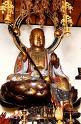
Legte das Gelübde ab, Leben zu retten und zu verlängern. Wenn man ihn sieben Tage lang intensiv verehrt, kann man zur Verlängerung seines Lebens beitragen. Frauen beten besonders in der Geburtsstunde zu dieser Gottheit.
CLICK for more photos !

Meist auf einem Lotussockel sitzend, das linke Bein herunterhängend, das rechte angehoben. Den rechten Arm auf das linke Knie gestützt, Hand an der Wange. In der linken Hand den Pilgerstab und in der rechten das wunscherfüllende Juwel.


Koyasu Jizoo 子安地蔵  kinderschützender Jizo


© Gabi Greve
Buddhastatuen (Buddhastatues) Who is Who
Ein Wegweiser zur Ikonografie von japanischen Buddhastatuen


:::::::::::::::::::::::::::::::::::::::::::::::::::::::::::::::::::::::::::::::::::::::::::::::::::::::::::::::::::::::::::


. Join the Jizo Bosatsu Gallery - Facebook .

Ozizousama

:::::::::::::::::::::::::::::::::::::::::::::::::::::::::::::::::::::::::::::::::::::::::::::::::::::::

[ . BACK to DARUMA MUSEUM TOP . ]
[ . BACK to WORLDKIGO . TOP . ]


:::::::::::::::::::::::::::::::::::::::::::::::::::::::::::::::::::::::::::::::::::::::::::::::::::::::

Jigoku Bosatsu Jizo

[ . BACK to DARUMA MUSEUM TOP . ]

:::::::::::::::::::::::::::::::::::::::::::::::::::::::::::::::::::::::::::::::::::::::::::::::::::::

Fudo Myo-O Gallery

:::::::::::::::::::::::::::::::::::::::::::::::::::::::::::::::::::::::::::::::::::::::::::::::::::::

Jigoku Bosatsu 地獄菩薩

Wall Buddhas in Kunisaki, Kyushu.
Bishamonten, Fudo Myo-O and Jigoku Bosatsu

「元宮磨崖仏」は高さ3m、幅6mもある。毘沙門天、不動明王、地獄菩薩などの仏像が安置されている。室町時代と推定されている。


© PHOTO nipponrentacar kunisaki


:::::::::::::::::::::::::::::::::::::::::::::::::::::::::::::::::::::::::::::::::::::::::::::::::::::


Namu Jigoku Daibosatsu 南無地獄大菩薩

Jigoku Bosatsu is another name for Jizo Bosatsu.

Ekaku Hakuin had a special realtion to this deity.
白隠と地獄

'Namu Jizô Ganshu Bosatsu' , a calligraphy by Hakuin.
http://www.terebess.hu/zen/hakuin/hakuin61.html

... ... ...

What's Compassion Got to Do with It?
Determinants of Zen Social Ethics in Japan

By Christopher Ives

Hakuin (1685-1768) is a prime example of a Zen thinker who affirms equality at the fundamental level of buddha-nature (the first line of Zazen Wasan (Song in Praise of Zazen) reads, "sentient beings are fundamentally buddhas") while accepting the notion that karma determines social standing. For example, in Segyō-uta (Song about the Practice of Giving), Hakuin valorizes inequality:

"Those who have riches and honors in this world are reaping the fruits of seeds that they planted in previous lifetimes. . . . This life depends on the seeds from previous lifetimes, and the future depends on seeds from this lifetime. The amount of wealth and honor depends on the amount of seeds sown. In this lifetime there is not much for us to sow, so select good seeds and sow them. . . . People who have to go and scavenge food that has been thrown away by others did not sow sufficient seeds in their previous existence, so now they are beggars."

:::::::::::::::::::::::::::::::::::::::::::::::::::::::::::::::::::::::::::::::::::::::::::::::::::::


My Jizo Bosatsu Articles


:::::::::::::::::::::::::::::::::::::::::::::::::::::::::::::::::::::::::::::::::::::::::::::::::::::

4/17/2007

Inuki Fudo in Tochigi

[ . BACK to DARUMA MUSEUM TOP . ]

:::::::::::::::::::::::::::::::::::::::::::::::::::::::::::::::::::::::::::::::::::::::::::::::::::::

Fudo Myo-O Gallery

:::::::::::::::::::::::::::::::::::::::::::::::::::::::::::::::::::::::::::::::::::::::::::::::::::::

Inuki Fudo in Tochigi 居貫不動


居貫不動明王立像 Standing Statue of Inuki Fudo
平安時代 ... Heian Period
栃木県指定有形文化財 Cultural Property of Tochigi Prefecture

This statue is 98,3 cm long and made of pine, with inlayed eyes. The head is made extra and could be taken off, in case there was a fire or calamity in the temple.
Inside the body was a hollow with many inscriptions and sutras. There were also papers with names of families who had lived in the area around 1350.

Legend has it the statue was carried so far by a priest from North Japan, who stayed at the temple over night. When he left next morning, the statue was too heavy for him to carry on, so he just left it in the temple and went away (inuki).


像高98.3センチ、杉材、玉眼、現状古色仕上げである。構造は頭体部を後頭部から足元にかけて前後に割放し、内刳りを施してから首のところで割首とする。

この内刳りされた像内に多数の印仏や版本般若心経、版本梵字宝篋印塔、版本梵字真言などが納入されていた。印仏の多くは書状や仮名暦、下絵の表裏に印仏されており、極楽往生や滅罪、衆生利益を願ってのものである。

書状には「小栗殿」や「なかさと殿」など真岡周辺にいた人物の名前があり、観応元年(1350)ごろに納入されたものである。寺伝によると、その昔奥州から不動尊を背負ってきた僧侶が明朝あまりの重さにやむなく置いて行ったという。そのためいつしかい居貫不動と呼ばれるようになった。膨大な納入品を暗示するような話である。

© Temple Shogon-Ji 荘厳寺


.............................................


From inside the statue, various offerings were discovered:

不動明王立像胎内納入文書


世に居貫不動と呼ばれ信仰されてきた不動尊の像内全体から昭和48年に多量の納入文書が発見された。一部は像内に納められていたが、大別すると次のとおりである。

1.如意輪観音菩薩坐像摺仏  178枚 suributsu
2.薬師如来坐像印仏        49枚 inbutsu
3.地蔵菩薩立像摺仏        60枚 suributsu
4.具注暦(版木)         3巻
5.具注暦(版木)         69枚
6.摩訶般若波羅密多心経(版木)  14枚
7.宝篋印塔(版木)         52枚
8.六字名号(版木)        22枚
9.手紙等の紙に地蔵菩薩立像の摺仏 166枚 suributsu

これらの宝篋印塔や光明真言、般若心経、地蔵菩薩立像等の印仏や摺仏は、茨城県岩瀬町妙法寺の地蔵菩薩像から出た納入品のものと同版で、保存状態は良好である。これらの文書が像内に収められたのは最終年号のある貞和六年以降である。不動明王像の面前をはずして文書を取り出す直前の写真によると、不動尊の木寄法もこの膨大な文書を納入することを意図して行われたようである。

© Tochigi Pref. Bunkazai

:::::::::::::::::::::::::::::::::::::::::::::::::::::::::::::::::::::::::::::::::::::::::::::::::::::


More Fudo Statues with scriptures and offerings inside

Ganjooju-In, Shizuoka Pref.
Inside the statue was a wooden tablet with a pagoda from the year 1186.
The statue was made by Unkei, ordered by Hojo Tokimasa.

願成就院(がんじょうじゅいん)は、静岡県伊豆の国市にある

不動明王ニ童子立像(大御堂・重文) - 本尊阿弥陀如来の眷属(脇侍)として安置されている。不動明王像の胎内に納められていた塔婆形銘札には、「文治2年(1186)5月3日、北条時政の発願により運慶が制作した」という趣旨の記載があり、運慶の真作であることと、制作時期が明らかになった。脇侍の制咤迦童子(せいたかどうじ)立像、矜羯羅童子(こんがらどうじ)立像にも同様に運慶の名が書かれた塔婆形銘札が胎内に収められており、運慶の真作と確認されている。30歳代の運慶の真作と呼べる作品は非常に少ないが、この不動明王ニ童子像はその時期の作品である。

中尊の不動明王像は筋骨隆々とした逞しい体つきが特色である。通常不動明王像は、片目で天、片目で地を睨み、口から2本突き出した牙も片方は上向き、もう片方は下向きである左右非対称の面相で表現されることが多いが、この不動明王像は平常眼であり、両目とも真正面を見据え、牙も両方とも上顎の牙である左右対称の面相となっている。また目は水晶に瞳を描いてはめ込んだ「玉眼」と呼ばれる技法で制作されており、爛々とした輝きを持つ。戦火を免れ現在に残る。この運慶作の平常眼の不動明王像を本尊とする者は、一宗を開くと伝えられている。新義真言宗の始祖である興教大師覚鑁の本尊は、この平常眼の不動明王であった。
© Wikipedia


GOOGLE with 不動明王 胎内

:::::::::::::::::::::::::::::::::::::::::::::::::::::::::::::::::::::::::::::::::::::::::::::::::::::


Daruma Museum

Making Buddha Statues 仏像作りBasic Information

Treasures Inside a Statue : Tainai Butsu 胎内佛, 胎内仏


:::::::::::::::::::::::::::::::::::::::::::::::::::::::::::::::::::::::::::::::::::::::::::::::::::::

Jundei Kannon

[ . BACK to DARUMA MUSEUM TOP . ]

:::::::::::::::::::::::::::::::::::::::::::::::::::::::::::::::::::::::::::::::::::::::::::::::::::::

Fudo Myo-O Gallery

:::::::::::::::::::::::::::::::::::::::::::::::::::::::::::::::::::::::::::::::::::::::::::::::::::::


Jundei Kannon, Juntei Kannon 准胝 観音

Jundei Kannon (Sunde) uses his infinite virtues for the salvation of mankind. He has three eyes and eighteen arms. He is less often represented than the other forms of Kannon. Within the six realms of existence, he saves mankind.


Click HERE to look at more statues !


:::::::::::::::::::::::::::::::::::::::::::::::::::::::::::::::::::::::::::::::::::::::::::::::::::::

Shichigutei Butsumo Kannon Bosatsu
Shichigutei means boundless number. He prays for wisdom, eliminating wars, and recovering from illness. He expresses vast range of virtue to save all the ordinary people lacking of happiness and filled with wicked acts. This deity belongs to both of Nyorai and Kannon.

He accomplishes wishes of priests or laymen, people drinking alcohol, eating meet, married or not married people. He has a style of one face with three eyes and twelve arms. Juntei Kannon Zazou(sitting statue) in Kamigodaiji-temple and Shin Yakushiji Ritsuzou(standing statue) are famous.


© 2005 KURITA TRADING CO.,LTD

:::::::::::::::::::::::::::::::::::::::::::::::::::::::::::::::::::::::::::::::::::::::::::::::::::


Kannon Bosatsu
Mark Schumacher


:::::::::::::::::::::::::::::::::::::::::::::::::::::::::::::::::::::::::::::::::::::::::::::::::::::

准胝仏母(じゅんていぶっぽ)

Jundei Butsumo, Juntei Buppo, Mother of the Buddhas

As a stone figure, she holds an ax in one of her hadns.


Reinheits-Kannon (Juntei (Jundei) Kannon; Cundii

Wird "Reine Mutter der Buddhas" (Juntei Butsumo) oder "Mutter der 700000 Buddhas" (Shichikutei Butsumo, Shichigutei Butsumo) genannt, da sie über das heilige Mantra (Butsumo Juntei Darani) verfügt, mit dem die 70 Millionen Buddhas der Vergangenheit die Erleuchtung erlangen. Eine rein weibliche Form. Im Volksglauben nicht häufig, aber im Ritual des esoterischen Buddhismus.

Als Mutterfigur gewährt sie Kindersegen. Alles, was sie berührt, wird gereinigt. Stiftet Frieden unter den kämpfenden Menschen und heilt Krankheiten. Reinigt die Herzen der Gläubigen.
Bei der Tendai-Sekte eine der sechs Kannon-Statuen, während bei der Shingon-Sekte statt dessen eine Kannon mit Netz und Seil verehrt wird.

Die meisten der abweichenden Kannon-Figuren sind Abwandlungen der indischen Götter, aber diese Kannon entstand rein aus der Philosophie des Buddhismus als Mutter der Buddhas, nicht als Spenderin von Reichtum oder Schützerin von Leib und Leben. Später wurde sie in der Shingon-Sekte auch die Schutzgottheit der Berg-Asketen.

Ikonografie:
Keine Verkörperungen in der Hohen Krone. Ein Kopf, drei Augen, acht Arme (seltener zwei oder vier), die mittleren Hände nicht im Gebet gefaltet, sondern in der Geste des Drehens des Rades der Lehre.

Eine Hand mit einer kleinen Axt, besonders bei Steinfiguren. Beim Mandala der Mutterschoßwelt mit 18 Armen, von denen 15 bestimmte Gegenstände tragen und drei eine bestimte Handhaltung einnehmen.
Häufig zwei Begleitfiguren auf einem Lotussockel oder mit zwei Drachen, die Lotusknospen halten.

© Gabi Greve
Buddhastatuen (Buddhastatues) Who is Who,
Ein Wegweiser zur Ikonografie von japanischen Buddhastatuen


. Kannon Bosatsu ... Introduction  

:::::::::::::::::::::::::::::::::::::::::::::::::::::::::::::::::::::::::::::::::::::::::::::::::::

Rietberg Museum

[ . BACK to DARUMA MUSEUM TOP . ]

:::::::::::::::::::::::::::::::::::::::::::::::::::::::::::::::::::::::::::::::::::::::::::::::::::::

Fudo Myo-O Gallery

:::::::::::::::::::::::::::::::::::::::::::::::::::::::::::::::::::::::::::::::::::::::::::::::::::::

Seated Fudo Myoo

Museum Rietberg Collection

Quote from : Orientations, Volume 38 - Number 2 - March 2007

Japan, Fujiwara period, second half of 12th century
Cypress wood with traces of polychrome decoration
Height 112 cm, width 42 cm


(© Photography by Rainer Wolfsberger)


A Short History of the Museum Rietberg Zurich
by Helmut Brinker, Professor Emeritus of the University of Zurich.

The author introduces the major holdings in the museum and the donors including the initial founder Baron Eduard von der Heydt who presented his extensive Asian art collection to the city of Zurich in 1952. Of paramount importance to him was the noble human images rendered most convincingly in sculptures of deities from the Buddhist and Hindu pantheons. Brinker discusses von der Heydt's acquisition policy and how he loaned during World War II entire collections to various institutions including to museums in the US which, to this day, have not been returned.

The von der Heydt collection was supplemented by the J.F.H. Menten collection of Chinese tomb sculpture when the Museum Rietberg was established and many other collectors of Asian art followed van der Heydt's example and entrusted their treasures to the museum. For example, the Japanese woodblock print collections of Willy Boller and Heinz Brasch were gifted by Julius Mueller; in 1971 Alice Boner donated her collection of Indian art and the collection of Chinese paintings assembled by Charles A. Drenowatz was the most significant donation in the period from 1970 to 1982.

During the 1980s Ernst Winkler bequested 43 archaic Chinese bronzes and Pierre Uldry's unique collection of Chinese cloisonne and gold and silver are also on view in the new galleries. No masks were given to the museum by Nanni and Balthasar Reinhart and the collection of Himalayan and Tibetan art has been enriched by Berti Aschmann's collection of gilt-bronze Buddhist sculptures.

© PHOTO and Text
www.orientations.com.hk


Ema Votive tablet from the Rietberg Museum

:::::::::::::::::::::::::::::::::::::::::::::::::::::::::::::::::::::::::::::::::::::::::::::::::::::

Helmut Heinrich Brinker
* 17. August 1939 in Lübbecke, Westfalen;
† 9. Juli 2012 in Langnau am Albis, Schweiz;
war ein deutsch-schweizerischer Kunsthistoriker und Sinologe.

Brinker studierte die Kunstgeschichte Ostasiens und abendländische Kunstgeschichte sowie Sinologie und Japanologie an den Universitäten Heidelberg, Harvard und Princeton. Er war Stipendiat der Studienstiftung des deutschen Volkes und hatte den Harkness Fellowship des Commonwealth Fund in New York inne. 1970 wurde er an der Ruprecht-Karls-Universität Heidelberg promoviert. Von 1970 bis 1982 war er Kurator am Museum Rietberg in Zürich und zuständig für die Oastasienabteilung.

Ab 1970 war er an der Universität Zürich tätig, zunächst als Lehrbeauftragter und Privatdozent. 1978 wurde Brinker als Extraordinarius und 1982 als Ordinarius für Kunstgeschichte Ostasiens an der Universität Zürich bestellt. Er galt als Experte für die Kunst des Zen-Buddhismus.

Brinker veröffentlichte zahlreiche wissenschaftliche Arbeiten und Bücher, darunter Zen in der Kunst des Malens (1985) und ZEN: Meister der Meditation in Bildern und Schriften (1993).
© More in the WIKIPEDIA !


Seckel, Ledderose and Brinker - Photo
. Prof. Dr. Dietrich Seckel .


:::::::::::::::::::::::::::::::::::::::::::::::::::::::::::::::::::::::::::::::::::::::::::::::::::::


Zaigai Hihô - Hidden Treasures Outside East Asia
Zaigai Hiho

source : c.zaigai-hiho.net

::::::::::::::::::::::::::::::::::::::::::::::::::::::::::::::::::::::::::::::::::::::::::::::::::::: 

[ . BACK to DARUMA MUSEUM TOP . ]
[ . BACK to WORLDKIGO . TOP . ]

::::::::::::::::::::::::::::::::::::::::::::::::::::::::::::::::::::::::::::::::::::::::::::::::::::: 

Kawanabe Kyosai

[ . BACK to DARUMA MUSEUM TOP . ]
:::::::::::::::::::::::::::::::::::::::::::::::::::::::::::::::::::::::::::::::::::::::::::::::::::::

Daruma Pilgirms Gallery

:::::::::::::::::::::::::::::::::::::::::::::::::::::::::::::::::::::::::::::::::::::::::::::::::::::

Kawanabe Kyosai 河鍋暁斎

Kawanabe Gyoosai (1831 - 1889)

Daruma and the Courtesans


Etsuko and Joe Price Collection
© Funaki Naoto Pages

. . . . .


source : www.muian.com


:::::::::::::::::::::::::::::::::::::::::::::::::::::::::::::::::::::::::::::::::::::::::::::::::::::


source : facebook

"Daruma" - 1888

:::::::::::::::::::::::::::::::::::::::::::::::::::::::::::::::::::::::::::::::::::::::::::::::::::::

Kawanabe Kyosai Memorial Museum
Warabi City, Saitama Prefecture, Japan 335-0003

About Kawanabe Kyosai (1831-1889)

CLICK for many more photos

This great artist has grown in stature as we have been able the better to get the Meiji period into perspective. He studied at an early age under Kuniyoshi and later under Kano masters, but eventually he went his own independent way. Essentially a nationalistic painter, he was nonetherless fully aware of Wetern art - indeed, he dealt with it quite broardmindedly in his book "Kyosai Gadan" published in 1887 - but he was robust enough not to succumb, as so many of his contemporaries did, to the blandishments of foreign styles, and was one of the last great painters in the truly Japanese tradition.

If he has a fault, it is over-exuberance: he paints vigorously with a full brush, but his immense bravura and skill are sometimes a little overpowering. But this very impetuousness and daring is often more economically used in smaller sketches and drawings and they have always elicited greater Western praise than many of his more important works.

CLICK Kyosai, because of the warmth of his personallity, his eccentricities and his known love for sake over and above his gifts as a painter, was a legend in his lifetime, and by great good fortune we have two intimate Western accounts of him at work: one by Emile Guimet, who with Felix Regamy, visited him in Japan in 1876, and wrote about him in "Promenades Japonaise," published in 1881; the other by Josiah Conder, the British architesct, who studied painting under Kyosai in the 1880s, and who, in his "Paintings and Studies by Kawanabe Kyosai," published in 1911, gave a very full account of the artist's methods.
Both Guimet and Conder were impressed by Kyosai's attack."
(Jaock Hiller)

© Kusumi Kawanabe, Director of the Museum


:::::::::::::::::::::::::::::::::::::::::::::::::::::::::::::::::::::::::::::::::::::::::::::::::::::


Kyosai Activities of the Twelve Months - 10th month
- source : Smithsonian -


:::::::::::::::::::::::::::::::::::::::::::::::::::::::::::::::::::::::::::::::::::::::::::::::::::::


河鍋暁斎 カエルとヘビの戯れ
Frogs and Serpents Frolicking
© Quote from : kuma90san.vox.com

:::::::::::::::::::::::::::::::::::::::::::::::::::::::::::::::::::::::::::::::::::::::::::::::::::::


Kawanabe Kyōsai (河鍋 暁斎, 1831– 1889)
was a Japanese artist, in the words of a critic, "an individualist and an independent, perhaps the last virtuoso in traditional Japanese painting".
His work like his life is somewhat wild and undisciplined, and occasionally smacks of the sake cup. In addition to his caricatures, Kyōsai painted a large number of pictures and sketches, often choosing subjects from the folklore of his country.
— in Japan.


- Shared by Kunio Hoshizaki -
Joys of Japan, 2012


:::::::::::::::::::::::::::::::::::::::::::::::::::::::::::::::::::::::::::::::::::::::::::::::::::::


CLICK for more photos
暁斎百鬼画談

Click thumbnail for more of his paintings.

:::::::::::::::::::::::::::::::::::::::::::::::::::::::::::::::::::::::::::::::::::::::::::::::::::::::::::::::::::::::::::

Watōnai as a Famous Toymaker (Watōnai 和藤内 hariko no meijin)


:::::::::::::::::::::::::::::::::::::::::::::::::::::::::::::::::::::::::::::::::::::::::::::::::::::::::::::::::::::::::::


湯島天満宮 ema votive tablet from Yushima Tenmangu

河鍋暁斎 - more reference
明治7年1874 湯島天満宮に額絵「野見宿禰と当麻蹶速図」を奉納、仮名垣魯文と日本初の絵入り新聞『絵新聞日本地』を刊行。 
大判錦絵シリーズ『暁斎楽画』を刊行、
「五号不動明王開花」が『新聞雑誌』で高く評価される。また、「月次風俗画」、などを描く。
- source : www.muian.com/muian04

:::::::::::::::::::::::::::::::::::::::::::::::::::::::::::::::::::::::::::::::::::::::::::::::::::::::::::::::::::::::::::

. Fudō Myō-ō, Fudoo Myoo-Oo 不動明王 Fudo Myo-O
Acala Vidyârâja - Vidyaraja .


Fiery God Fudo and Assistants

The fiery god is totally immersed in reading a news magazine . Meanwhile, one of his assistant, Seitaka, is warming sake bottle with Fudo's fire. Kongara is cutting beef for a supper. A leg of ox is hanged on the right.
source : Hayato Tokugawa - facebook


- quote
Fiery God Fudo and Assistants, 1874. Oban.
This is a very good and famous print from the less well known but hugely collectible artist Kawanabe Kyosai. A pupil of Utagawa Kuniyoshi and son of a samurai, Kyosai was a political satirist and famously described as “perhaps the last virtuoso in traditional Japanese painting”. Some consider him the natural successor to Hokusai and as the first political caricaturist of Japan.

Although this print is the most commonly reproduced of Kyosai’s work in catalogues it rarely comes to the market. It represents one of the five 'Kings of Wisdom' in Buddhism.
The print though is a satire on Japanese society because the terrible God Fudo is reading a popular newspaper whilst his assistants prepare food for him. Seitaka is warming a sake bottle and Kongara is cutting meat for his supper; a leg of beef is seen hanging on the right of the print.
Kyosai was a pupil of Kuniyoshi and we can see again in this print the influence of western art and design in the drawing of the figures - Fudo here resembles Hercules, and the overall quality and composition has something of the English eighteenth century satires of Gilray about it.
It is a humorous piece, the flames of the cooking fire evoke the more serious flames of hell with which Fudo is associated and the thrust of the design is presumably critical of the modern, relaxed society that Japan had become in the 1870’s.
- source : xxx


source : ameblo.jp/masaatsutomishima

:::::::::::::::::::::::::::::::::::::::::::::::::::::::::::::::::::::::::::::::::::::::::::::::::::::::::::::::::::::::::::

. 河鍋暁斎 Kawanabe Kyosai - Hell Paintings .
- Oni 鬼 demons of hell

:::::::::::::::::::::::::::::::::::::::::::::::::::::::::

. ukiyo-e 浮世絵 Ukiyo-E with Tengu by Kawanabe .

:::::::::::::::::::::::::::::::::::::::::::::::::::::::::::::::::::::::::::::::::::::::::::::::::::::::::::::::::::::::::::

[ . BACK to DARUMA MUSEUM TOP . ]
[ . BACK to WORLDKIGO . TOP . ]
- #kawanabekyosai #kawanabe -
:::::::::::::::::::::::::::::::::::::::::::::::::::::::::::::::::::::::::::::::::::::::::::::::::::::::::::::::::::::::::::

4/10/2007

Daruma Nagaya

[ . BACK to DARUMA MUSEUM TOP . ]

:::::::::::::::::::::::::::::::::::::::::::::::::::::::::::::::::::::::::::::::::::::::::::::::::::::

Daruma Pilgrims Gallery

:::::::::::::::::::::::::::::::::::::::::::::::::::::::::::::::::::::::::::::::::::::::::::::::::::::

Row Houses, long houses, nagaya 
長屋 ながや


tenement houses, a long row of one-story cottages or apartments. Up to 50 rooms could be joined in one long house (gojikken nagaya 五十間長屋).


Long houses, row houses were a speciality of the Edo period, where many people had to live in the ever-growing city. To prevent crime, nagaya people where often of the same rural area and knew each other. They used the same well. At each entrance of the middle road was a gate (nagaya mon 長屋門) which could be bolted at night for further safety.

The entrance to my own rural estate here in the mountains is also called "nagaya mon".

The comical events of life in the Nagaya were often part of Senryu and Rakugo stories.

... ... ...


Click on the photo to see more !

:::::::::::::::::::::::::::::::::::::::::::::::::::::::::::::::::::::::::::::::::::::::::::::::::::

Quote
While almost the entire shita-machi area of Edo can be roughly described as "working class", few areas are as representative of the hard-working day laborers who keep the city running smoothly. The neighborhoods of Edo are divided into cho ("towns") that average about one hectare in size (2.5 acres). Each cho has its own local leaders and its own local services such as the ban-nin ("town watch", or police) and the shobo-nin (firefighters).

Most cho are further divided into about a dozen ban ("blocks" of houses). In Fukagawa, most of the ban are occupied by five or ten row houses (nagaya). These are long, two-story buildings that contain up to a hundred individual "apartments". Usually, two row houses are built around a central square with one or more wells and some green space between the two buildings where people can relax and socialize, and where the children can play.

The central square between the row houses is the focus of daily life for residents. Most nagaya have only small windows facing the street, while the doors of each apartment face the central square. The central square is semi-paved, and has a few small trees and shrubs. At one end of the square is a large well, which everyone in the "block" uses for washing and drinking water.

At the other end of the square is a public toilet. In most residential districts of Edo, public toilets are the norm. The people of Edo do not dump their sewage into the rivers or oceans, as is done in many other cities around the world. Instead, all human waste is collected, composted and recycled as manure for farming. This is one reason why Edo has a relatively low incidence of disease -- there is no sewage to pollute the water supply or serve as a breeding ground for bacteria. In this sense, sanitation in Edo is far more advanced than in most other parts of the world. Manure collectors visit the neighborhood once a week, and carry away the waste to a composting area in the countryside. This keeps the entire town clean and sanitary.

The apartments in the nagaya are very small. Each individual unit has a single room about six tatami mats in size. A tatami is a heavy straw mat used on the floor of most Japanese homes. Since the mats are always made to a specific size, rooms are often measured in terms of the number of tatami on the floor. A six-tatami room is about 3.5 meters (12 feet) square.

Typically, an entire family -- parents, children and perhaps grandparents as well -- will live in one of these rooms. However, in cases where several adult siblings live in the same "block", they may share the cost of a separate third apartment for the grandparents.

These relatively crowded conditions are one reason why the central suare is the focus of daily life. Houses are too small for the family to spend all day indoors. In fact, the apartments are mainly used just for sleeping. All other daily chores are done in the central square.In the evenings, after a hard day's work, the men will bring out mats and spread them on the ground, then spend the evening talking to their neighbors, smoking, sipping sake and eating the food that the women of the neighborhood have prepared.
source : www.us-japan.org/edomatsu/


A famous Scroll


久留米藩江戸勤番長屋絵巻
A Tour of Duty: Kurume Hanshi Edo Kinban Nagaya Emaki

:::::::::::::::::::::::::::::::::::::::::::::::::::::::::::::::::::::::::::::::::::::::::::::::::::::

................. "Murder in the Daruma Long House"
Story nr. 405 in the long series of stories about the Edo period detective
Zenigata Heiji

だるま長屋殺人事件 Daruma Nagaya Satsujin Jiken
銭形平次 / 第405話 

Zenigata Heiji and Kanda Myoojin Shrine


江戸は両国裏のだるま長屋。貧すれど鈍せぬ愉快な連中が集っている。髪結床の幸兵衛、お兼夫婦は混血の孤児マリを引取って十年間、実の娘お花とともに育てているというお人好し。そのお花は遊び人金太に惚れているが、一方では駕籠屋の千吉、万吉がお花を狙っている。長屋には、この他子沢山の大工寅五郎、絵描きの助六、浪人海野弥十郎、女芸人お仙お八重、魚屋の熱心太助などがいる。ある日、幸兵衛の家へマリの叔父叔母と名乗る長崎屋銀蔵、お鉄の中年夫婦が訪れ、養育謝礼として五十両を置き、マリを引取りたいと申出た。

幸兵衛は一たん金を受取るが、マリの行末を思い、その夜、銀蔵夫婦の宿へ金を返しに行った。ところが幸兵衛は途中で金を落してしまった。幸兵衛はお兼にも打明けられず困っていると、翌日、銀蔵夫婦が再び訪れ、江戸見物にとマリを連れ出した。マリを案ずる幸兵衛は遂にお兼に一切を話し、長屋衆の意見を聞き、マリの母が残した異人のかたみの指輪を質に入れて金を作りマリを取返すことにした。が指輪は、実はマリの父親の莫大の遺産を狙う銀蔵の差向けた不逞の浪人、黒鞘組に奪われた。

その頃マリは銀蔵夫婦に連れられ江戸見物をしていたが、太助の急報で尾行した金太は鉄蔵の好計を見破りここに長屋衆対黒鞘組の乱闘か始った。その間に金太はマリを保護、一同に、この裁きは名奉行遠山にお願いしたらと言残して去った。翌日、北町奉行所に出頭した一同は、現れた奉行を見てびっくり。金太こそ遠山金四郎その人であった。金四郎は鉄蔵らの悪企みを暴き、マリは幸兵衛夫婦の許に再び戻り、長屋には平和が蘇った。
http://img.movie.goo.ne.jp/movies/PMVWKPD25308/story.html

:::::::::::::::::::::::::::::::::::::::::::::::::::::::::::::::::::::::::::::::::::::::::::::::::::


The Ghost Long House / O-Bake Nagaya お化け長屋


A famous Rakugo Story.

長屋の中の一軒が空き家になっている。長屋の連中はこの空き家を漬物樽の置き場に したり、物干し竿の置き場にしたりしていた。それが大家さんに知れて、以後使用は まかりならんということになったが、困るのは長屋の連中でしてね、一計を案じた。
http://www.amazon.com/Rakugo-Meijinkai-V-24-Kokontei-Kowakarege/dp/B00005G6TL


... ... ...

Poor tenants' sakura viewing party
Nagaya no Hanami 長屋の花見

長屋の花見のかまぼこは・・・・・
古典落語の〔長屋の花見〕貧乏長屋の大家さんが音頭を取って、一同、花見に出かけました。上野のお山に来たものの、一升瓶の中身は番茶、重箱に詰めた卵焼きの つもりの黄色いたくあん。かまぼこの形に切った大根のおこうこ。
これでご馳走食べて、酔ったふりして浮かれろってんで ...。なんとも残酷な話しです。ボリボリ音をたてないで、 おこうこのかまぼこを食べる苦労!「おっと、このかまぼこは漬け過ぎて酸っぱい」なんて....。かまぼこファンのあなたもぼくも、江戸時代に生まれないで「シアワセだなァ!」
http://www.kagosei.co.jp/dokuhon/dokuhon/dokuhon06.html


:::::::::::::::::::::::::::::::::::::::::::::::::::::::::::::::::::::::::::::::::::::::::::::::::::::


yarido  遣り戸, 鑓戸, 槍戸
sliding door made of wood, at the outside of a home or estate
nowadays an amado 雨戸 "rain door"

yaridoguchi 遣り戸口 entrance/exit with a yarido
first used in the Heian period

kamoi 鴨居 a narrow piece of wood that passes over the sliding doors and around an entire Japanese room.


. KIGO about the Japanese Home .


:::::::::::::::::::::::::::::::::::::::::::::::::::::::::::::::::::::::::::::::::::::::::::::::::::::


. . . . . H A I K U


秋風の鑓戸の口やとがり声
akikaze no yarido no kuchi ya togarigoe

autumn wind
through the opening of the sliding door -
this piercing sound

Tr. Gabi Greve

Written in寛文7年, Basho age 24


This is a pun with the sound YARI, which can also mean a spear 槍, piercing through the door to hit an enemy.

. Matsuo Basho 松尾芭蕉 - Archives of the WKD .


:::::::::::::::::::::::::::::::::::::::::::::::::::::::::::::::::::::::::::::::::::::::::::::::::::::


朝がすみ天守の雨戸聞へけり
asa-gasumi tenshu no amado kikoe keri

morning mist--
the castle's shutters
bang open

Tr. David Lanoue


. WKD : Kobayashi Issa 小林一茶 .


:::::::::::::::::::::::::::::::::::::::::::::::::::::::::::::::::::::::::::::::::::::::::::::::::::::

hito-nagaya joo o oroshite odori kana

The whole tenement house,
Having locked their doors,
Are dancing and dancing.


. Kikaku Takarai Kikaku 宝井其角 .
(Tr. Blyth)


Locks of the Edo Period / joomae 錠前


:::::::::::::::::::::::::::::::::::::::::::::::::::::::::::::::::::::::::::::::::::::::::::::::::::::

Rakugo, comic storytelling performances Japan


. Storehouse, warehouse (kura 蔵) .
and
joomae 錠前 locks of the Edo Period


source : maboroshi-ch.com

. - - - Welcome to Edo 江戸 ! .
ooya, Ōya 大家 Oya, landlord
tanago 店子 tenant


:::::::::::::::::::::::::::::::::::::::::::::::::::::::::::::::::::::::::::::::::::::::::::::::::::::::::::::::::::::::::::

[ . BACK to DARUMA MUSEUM TOP . ]
[ . BACK to WORLDKIGO . TOP . ]
:::::::::::::::::::::::::::::::::::::::::::::::::::::::::::::::::::::::::::::::::::::::::::::::::::::::::::::::::::::::::::

4/07/2007

Sakushu Kaido

[ . BACK to DARUMA MUSEUM TOP . ]
. Kaido 街道 Highways - ABC Index .

:::::::::::::::::::::::::::::::::::::::::::::::::::::::::::::::::::::::::::::::::::::::::::::::::::::

Daruma Pilgrims Gallery

:::::::::::::::::::::::::::::::::::::::::::::::::::::::::::::::::::::::::::::::::::::::::::::::::::::

The Old Road of Sakushu, Sakushu Kaido
津山広域農道 (Sakushuu Kaidoo作州街道)

From Okayama / Kurashiki to Kurayoshi and Tottori
国道179号線


A Stone Marker in Sakai / Ohaga


On the way

Kita no Sho Shrine

:::::::::::::::::::::::::::::::::::::::::::::::::::::::::::::::::::::::::::::::::::::::::::::::::::::

Tomada 苫田 / Oku-Tsu 奥津


:::::::::::::::::::::::::::::::::::::::::::::::::::::::::::::::::::::::::::::::::::::::::::::::::::::

Chizu 智頭宿


© PHOTO Chizu Kanko

作州街道との分岐点にある米原家
Look at more photos of Chizu on the PHOTO LINK.


:::::::::::::::::::::::::::::::::::::::::::::::::::::::::::::::::::::::::::::::::::::::::::::::::::::

Sekigane Town and Hot Spring 関金町

It is said that Kobo Daishi first used the hot springs of this area.
Mitoku San is also very close.


Sekigane Town

は江戸時代に作州街道の宿場町として栄えた歴史がある .

:::::::::::::::::::::::::::::::::::::::::::::::::::::::::::::::::::::::::::::::::::::::::::::::::::::

Kurayoshi 倉吉


My Visit to
Kurayoshi, Postal Station of the Sakushu Road


1250年前に発見されたと言われており、かつては作州街道の宿場町として賑わっていました。

Kurayoshi, Postal Station of the Sakushu Road Many Photos of Kurayoshi

:::::::::::::::::::::::::::::::::::::::::::::::::::::::::::::::::::::::::::::::::::::::::::::::::::::

. Kaido 街道 Highways - ABC Index .

:::::::::::::::::::::::::::::::::::::::::::::::::::::::::::::::::::::::::::::::::::::::::::::::::::::::::::::::::::::::::::

[ . BACK to DARUMA MUSEUM TOP . ]
[ . BACK to WORLDKIGO . TOP . ]
- #sakushukaido #sakushu #okayama -
:::::::::::::::::::::::::::::::::::::::::::::::::::::::::::::::::::::::::::::::::::::::::::::::::::::::::::::::::::::::::::