:::::::::::::::::::::::::::::::::::::::::::::::::::::::::::::::::::::::::::::::::::::::::::::::::::::
Fudo Myo-O Gallery
. Jizo Bosatsu 地蔵菩薩 - Kshitigarbha .
:::::::::::::::::::::::::::::::::::::::::::::::::::::::::::::::::::::::::::::::::::::::::::::::::::::
Agonashi Jizo 腮無( あごなし)地蔵
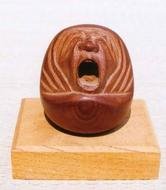
Jizo without a jaw
Jizo without a chin あごなし地蔵尊

隠岐島のあごなし地蔵尊の遷座.
東光院萩の寺 Hagi no Tera, Osaka
大阪府豊中市南桜塚1丁目12番7号
The two figures by the side of Jizo are
Shoozen 掌善(しょうぜん)
Shooaku 掌悪(しょうあく)
Jizo curing a toothace 歯痛平癒
In the year 1870, the temple 伴桂寺 at Oki Island had to close down. The last priest of the temple had been a disciple of the head prist of the Hagi Temple in Osaka, so he gave all his temple treasures to the Hagi Temple, including the statue of the "Jizo without a jaw", made by Ono no Takamura 小野篁(おののたかむら)卿正.
Two years later a special hall was built for the statue,which is a secret statue (hibutsu) and only shown once a year.
ago naoshi 阿古直し ... ago nashi
In the Heian period, 小野篁 Ono no Takamura was exiled to Iki Island.
There he fell in love with the beautiful 阿古那 Akona. When he was allowed to go back to Kyoto, he left her wooden two statues featuring the both of them.
They seemed to help with toothace and were later seen as Jizo Bosatsu.
They also helped with other pain, for example during pregnancy.
Even today, there are many letters of gratitude.
This is a pun with her name, Akona (Agona) and agonashi (no jaw)
. Legends of the Heian Period (794 to 1185) 平安時代の伝説 .
. Ono no Takamura 小野篁 (802 - 852) .
. Agonashi Jizo - Legend from Nagasaki .
source : www.haginotera.or.jp
:::::::::::::::::::::::::::::::::::::::::::::::::::::::::::::::::::::::::::::::::::::::::::::::::::::
The legend from the village of Kanawa
in Omiya Town
Once upon a long long time
far away from this town on the island of Oki, there lived a man who had a painful toothache. For three days, he was crying all day long
"My tooth aces, my tooth aces so much!"
He could not sleep at night and not eat during the day because of the pain.
In the end he pulled out his jaw, threw it away - and died.

But then, how wonderful, he was reborn as a Bodhisattva.
The pious people of Oki Island then made a wooden statue of Jizo without a chin and prayed to it when they got a toothache.
Soon people from far away also came to pray for healing, and as a gift of gratitude placed one nashi pear into a nearby river or lake or the ocean.
(This is a pun on the sound of NASHI, pear, or
NASHI, to have not (a toothache).

One month during the following year, they placed a nashi pear in the water.
And all the nashi pears flow back to Oki Island.
That was all long long ago, and now we come to a story that happened about 160 years ago.

The farmer Hayashi Yasubei from Kanawa 金輪の林安兵衛 went to the wilderness where the Statue was located, hoisted it on his back and carried it all the way to his village, Kanawa, to a little temple. That was in the Year Tenpo 10, on March 24.
So to our day there is a monthly festival at this temple now.
Tenpo 10, by the way, is the year 1841 of the Edo period.

source : www.bunka.pref.mie.
:::::::::::::::::::::::::::::::::::::::::::::::::::::::::::::::::::::::::::::::::::::::::::::::::::::
quote
Glimpses of Unfamiliar Japan
Lafcadio Hearn
I had first heard in Matsue of Agonashi-Jizo, while suffering from one of those toothaches in which the pain appears to be several hundred miles in depth--one of those toothaches which disturb your ideas of space and time. And a friend who sympathised said:
'People who have toothache pray to Agonashi-Jizo. Agonashi-Jizo is in Oki, but Izumo people pray to him. When cured they go to Lake Shinji, to the river, to the sea, or to any running stream, and drop into the water twelve pears (nashi), one for each of the twelve months. And they believe the currents will carry all these to Oki across the sea.
'Now, Agonashi-Jizo means 'Jizo-who-has-no-jaw.'
For it is said that in one of his former lives Jizo had such a toothache in his lower jaw that he tore off his jaw, and threw it away, and died. And he became a Bosatsu. And the people of Oki made a statue of him without a jaw; and all who suffer toothache pray to that Jizo of Oki.'
This story interested me for more than once I had felt a strong desire to do like Agonashi-Jizo, though lacking the necessary courage and indifference to earthly consequences. Moreover, the tradition suggested so humane and profound a comprehension of toothache, and so large a
sympathy with its victims, that I felt myself somewhat consoled.
Nevertheless, I did not go to see Agonashi-Jizo, because I found out there was no longer any Agonashi-Jizo to see. The news was brought one evening by some friends, shizoku of Matsue, who had settled in Oki, a young police officer and his wife. They had walked right across the island to see us, starting before daylight, and crossing no less than thirty-two torrents on their way. The wife, only nineteen, was quite slender and pretty, and did not appear tired by that long rough journey.
What we learned about the famous Jizo was this:
The name Agonashi-Jizo was only a popular corruption of the true name, Agonaoshi-Jizo, or 'Jizo-the-Healer-of-jaws.'
The little temple in which the statue stood had been burned, and the statue along with it, except a fragment of the lower part of the figure, now piously preserved by some old peasant woman. It was impossible to rebuild the temple, as the disestablishment of Buddhism had entirely destroyed the resources of that faith in Oki.
But the peasantry of Tsubamezato had built a little Shinto miya on the sight of the temple, with a torii before it, and people still prayed there to Agonaoshi-Jizo.
This last curious fact reminded me of the little torii I had seen erected before the images of Jizo in the Cave of the Children's Ghosts. Shinto, in these remote districts of the west, now appropriates the popular divinities of Buddhism, just as of old Buddhism used to absorb
the divinities of Shinto in other parts of Japan.
source : www.gramotey.com
:::::::::::::::::::::::::::::::::::::::::::::::::::::::::::::::::::::::::::::::::::::::::::::::::::::

Ago nashi Jizo at temple Koosaiji 広済寺 Kosai-Ji
Saitama, Kawagoe, Kita Town 川越市喜多町に広済寺
If you have no chin, you have no teeth and can not get a toothache.
People who got healed when praying to this statue brought a toothpick made from a willow branch as an offering.
source : www.tabi2ikitai.com
:::::::::::::::::::::::::::::::::::::::::::::::::::::::::::::::::::::::::::::::::::::::::::::::::::::

temple Jikooji 慈光寺 Jiko-Ji of the Kannon Pilgrimage
Saitama
埼玉県比企郡ときがわ町
source : ohenro.blog.ocn.ne.jp
:::::::::::::::::::::::::::::::::::::::::::::::::::::::::::::::::::::::::::::::::::::::::::::::::::::

On a roadside near the river Kakogawa in Hyogo
"so that Jizo can help all people who leave town and seek good fortune".
This Jizo stands in a small wooden hall, with a stone marker by its side.
The chin of the statue is covered by a red big, so we do not know wheather it has a chin or not.
加古川 兵庫
source : www.hyogo-c.ed.jp
:::::::::::::::::::::::::::::::::::::::::::::::::::::::::::::::::::::::::::::::::::::::::::::::::::::

Taikichoo in Mie. 大紀町三重県
source : michihata
. . . CLICK here for more Photos !
.......................................................................
. agonash Jizo アゴなし地蔵 Jizo without a jaw .
大原山 Daigensan - 不動院 Fudo-In, Fukuoka
.......................................................................
More Jizo to help your toothache
. Haitadome Jizo 歯痛止のお地蔵さん .
Hagami Jizo 歯神地蔵尊
Jizo as God for Toothache
:::::::::::::::::::::::::::::::::::::::::::::::::::::::::::::::::::::::::::::::::::::::::::::::::::::
梅雨最中 ずきずき ずきと 歯の痛み
tsuyu sanaka zukizuki zuki to ha no itami
long rainy season -
splitting splitting splitting
my tooth aches
. Gabi Greve, 2006 .
the god of toothache -
I wish I was there
to add my coin
In the town of Kathmandu in Nepal there is a God of Toothache at a road corner in Thamel, just a piece of wood shaped like a molar itself. If you have a toothache, you go there and hammer one coin wishing your illness might pass.
. Toothache and Haiku .
:::::::::::::::::::::::::::::::::::::::::::::::::::::::::::::::::::::::::::::::::::::::::::::::::::::
With a map of the location:
source : okinoshima.info
. Reference : Agonashi Jizo
. Jizo Bosatsu 地蔵菩薩 .
O-Fudo Sama Gallery
:::::::::::::::::::::::::::::::::::::::::::::::::::::::::::::::::::::::::::::::::::::::::::::::::::::
. Amulets and Talismans for your health .
[ . BACK to WORLDKIGO . TOP . ]
[ . BACK to DARUMA MUSEUM TOP . ]
:::::::::::::::::::::::::::::::::::::::::::::::::::::::::::::::::::::::::::::::::::::::::::::::::::::



 Posts
Posts


